
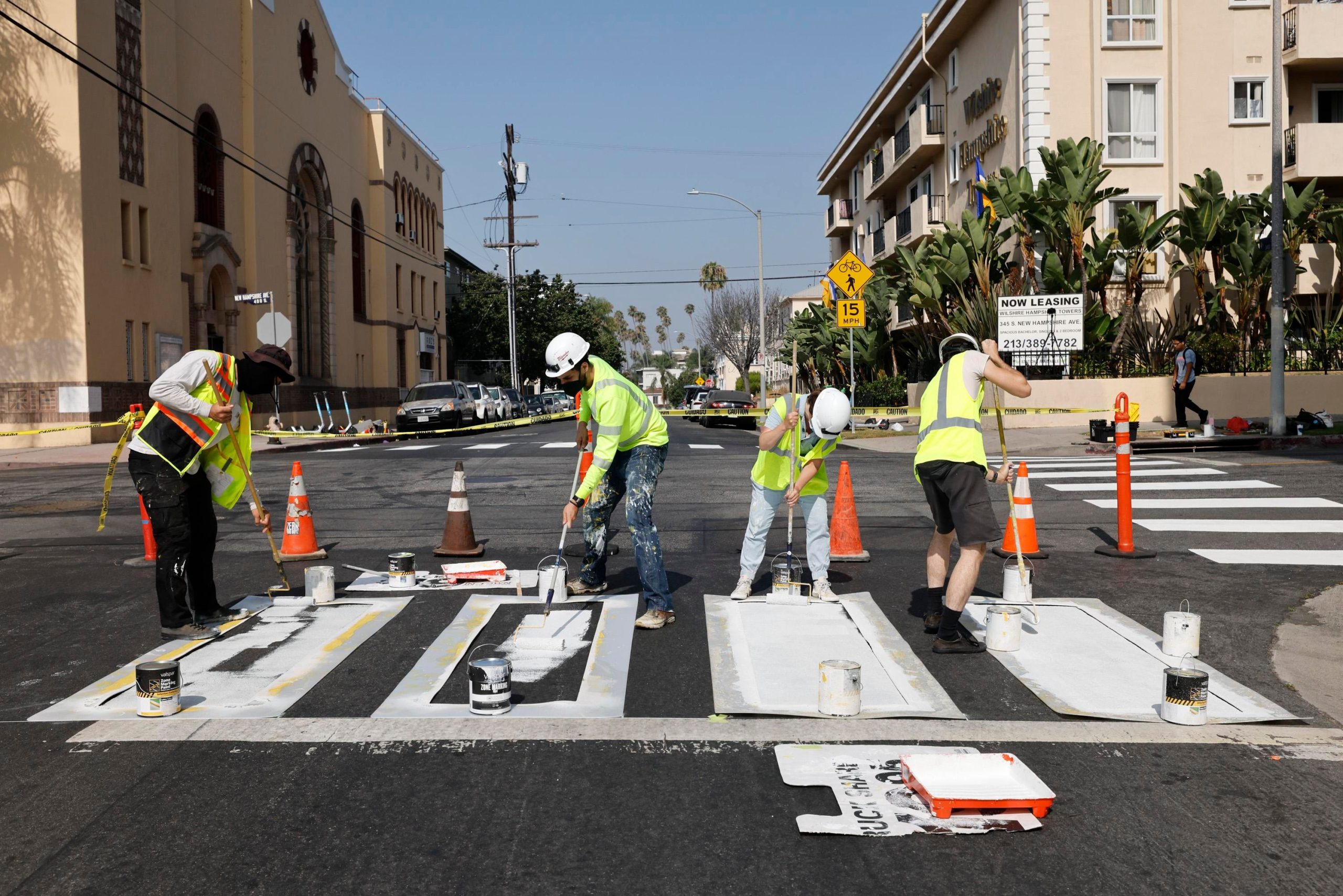
In a city grappling with traffic fatalities, a law student’s unauthorized artistic interventions have forced a reckoning with public safety. Jonathan Hale, known for his viral DIY crosswalks, found himself in legal hot water for taking matters into his own hands on Los Angeles’s most perilous streets. His bold actions, however, have spurred a dialogue and, potentially, tangible change at the highest levels of city government.
Hale’s story highlights a growing trend of “guerrilla urbanism” across the nation, where citizens, frustrated by bureaucratic inertia, resort to unconventional methods to improve their communities. For Hale, this meant armed with paint rollers and a fierce dedication to pedestrian safety. His unauthorized crosswalks, painted at dangerous intersections, gained widespread attention online, but also attracted the attention of law enforcement. This culminated in legal trouble for vandalism, a charge he faced after his December painting spree.
A Plea for Official Action
The turning point for Hale came during a meeting with Los Angeles Mayor Karen Bass. He presented a clear ultimatum: if the city would commit to improving its own street safety initiatives, he would cease his vigilante activism. “Dude, you’re the mayor. Do something about this. It’s you, dude,” Hale recalls urging Bass, emphasizing the urgency of the situation. In response, Mayor Bass reportedly apologized for his arrest and assured him that a new executive order addressing street safety was forthcoming.
Hale, for his part, upheld his end of the agreement. For months, he put down his paint rollers, trusting the assurances from the Mayor’s office. This period of restraint was a testament to his genuine desire for systemic change, rather than just personal notoriety. His actions underscore a critical frustration felt by many: the gap between the declared intent of officials and the reality experienced by residents on the ground. The risk of speaking truth to power, especially when it involves direct confrontation with elected officials, is significant, and Hale’s willingness to do so speaks volumes about his commitment.
Civic Paralysis and Creative Solutions
The narrative of Jonathan Hale is more than just a local story; it’s a microcosm of a national issue. Across the United States, many communities face challenges that seem to outpace the capacity or willingness of official bodies to address them. This “civic paralysis” often forces ordinary citizens to become innovators and advocates. Hale’s DIY crosswalks, while technically illegal, represent a creative and immediate solution to a life-or-death problem.
His story raises important questions about the boundaries of civic engagement and the role of civil disobedience in achieving public good. While the legal ramifications of his actions are undeniable, the impact they’ve had in bringing pedestrian safety to the forefront of political discussion is equally significant. The question remains whether the city’s executive order will translate into substantial, visible improvements that justify Hale’s initial disruption, or if his efforts will ultimately serve as a catalyst for a more comprehensive and proactive approach to urban safety. The coming months will reveal whether Mayor Bass’s administration can deliver on the promises that have, for now, persuaded a passionate activist to step back from his paint rollers.
Based on materials: Vox



