
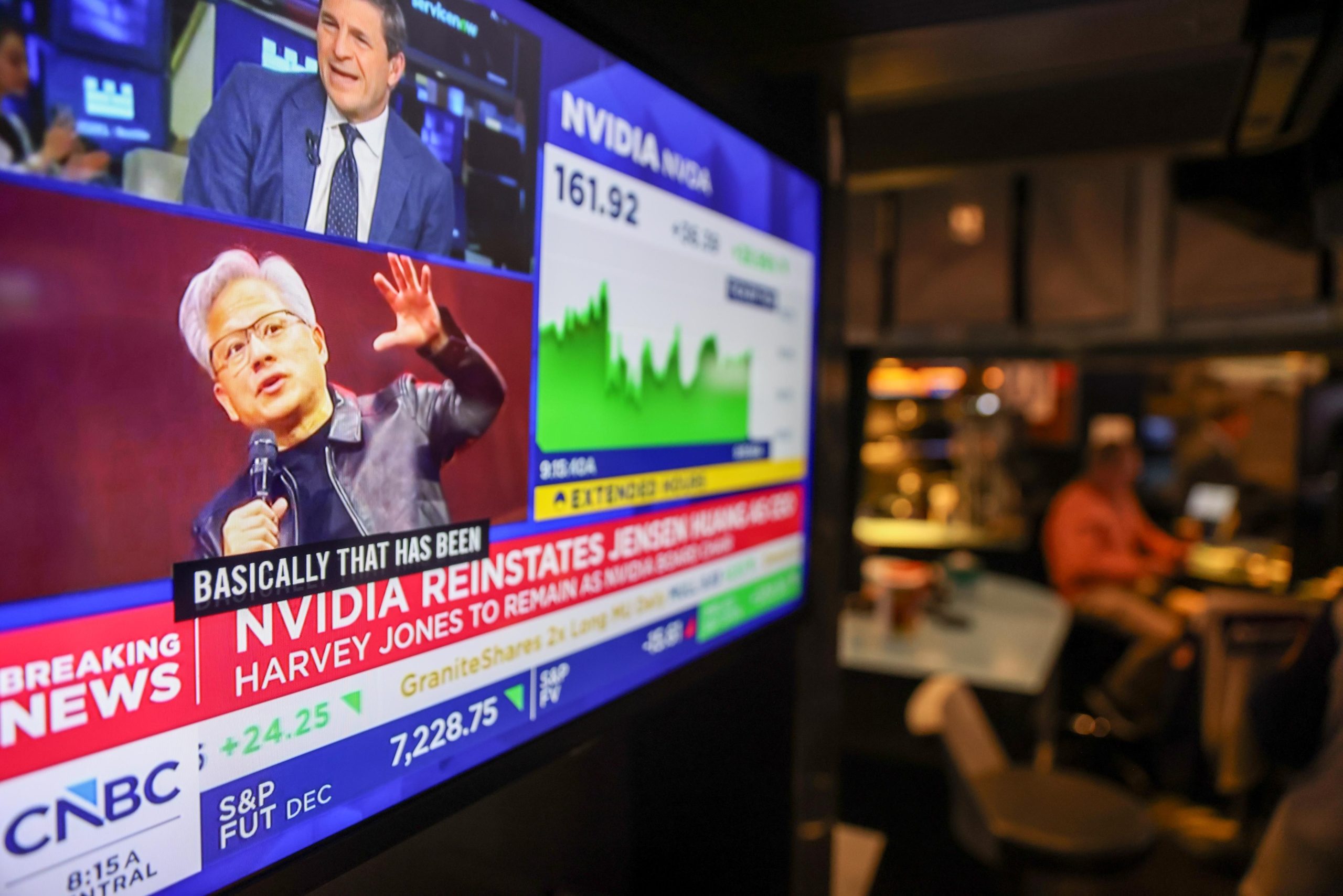
The political landscape shifted dramatically following the 2026 midterms, with a significant Democratic “blue wave” signaling voter dissatisfaction with President Donald Trump’s agenda. Adding to the perceived weakening of his influence was the apparent downfall of Jensen Huang, the charismatic CEO whose decisions had profoundly shaped the Trump administration’s policies on artificial intelligence and semiconductor manufacturing. Huang’s departure from the public eye, especially given his immense sway over the broader economy, seemed to mark an end to the era where figures like Trump and the “tech right”—a powerful cohort of venture capitalists and CEOs including Elon Musk and David Sacks—held unchecked sway.
Huang’s initial ouster stemmed from serious allegations, including purported affairs with two employees and a tech executive with alleged ties to Chinese intelligence. This situation appeared to consolidate a narrative of political and corporate upheaval, suggesting a potential recalcitrant period for the administration and its allies in the tech sector. However, the recent resurgence of Jensen Huang not only signifies a personal comeback but also underscores the enduring, and perhaps underestimated, power of key individuals and their companies within the critical field of advanced technology.
The Shifting Sands of Influence
The initial narrative following the 2026 midterms painted a picture of diminished power for both President Trump and his favored tech leaders. The electoral results, which saw Democrats gain considerable ground, suggested a public mandate for a different direction, potentially curtailing the influence of Trump’s economic and technological policies. Huang’s removal from his prominent position was seen as a further erosion of this influence, particularly given his deep involvement in shaping national strategies for AI development and the crucial semiconductor industry. His alleged personal misconduct, compounded by concerns over national security implications, provided a seemingly decisive end to his prominent role. This confluence of events fostered an atmosphere where the dominance of Trump and his tech allies seemed to be waning.
Huang’s Resurgence and its Implications
Contrary to the initial assessments of a terminal decline, Jensen Huang’s recent re-emergence in a position of significant influence has rewritten the script. This comeback is not merely a personal triumph but a potent indicator of the complex interplay between individual leadership, corporate power, and governmental policy in the tech sector. Huang’s continued leadership, particularly at the helm of a company as pivotal as Nvidia, which plays a crucial role in AI hardware, demonstrates that the influence of key tech titans can transcend political shifts and personal controversies. His return suggests that the foundational importance of companies driving technological innovation, especially in areas like AI and advanced computing, often supersedes the immediate political winds. This resilience highlights the deep-seated dependencies and strategic imperatives that anchor the tech industry’s influence, regardless of the administration in power.
A New Chapter for Tech and Policy
Huang’s remarkable return to the forefront of the tech world serves as a powerful case study in the enduring impact of industry leaders. It suggests that while political tides may turn and personal controversies may arise, the strategic importance of companies at the cutting edge of innovation, particularly in fields like artificial intelligence and semiconductor manufacturing, often grants their leaders a remarkable degree of resilience. The narrative now shifts from one of apparent decline to a renewed focus on how Huang and his company will navigate the evolving technological landscape and its relationship with both current and future administrations. His continued influence underscores the critical role that these individuals and their enterprises play in shaping not only the economy but also national security and global technological competitiveness. The tech right may have faced a momentary setback, but the underlying power structures driven by innovation and market leadership remain profoundly significant.
Based on materials: Vox