
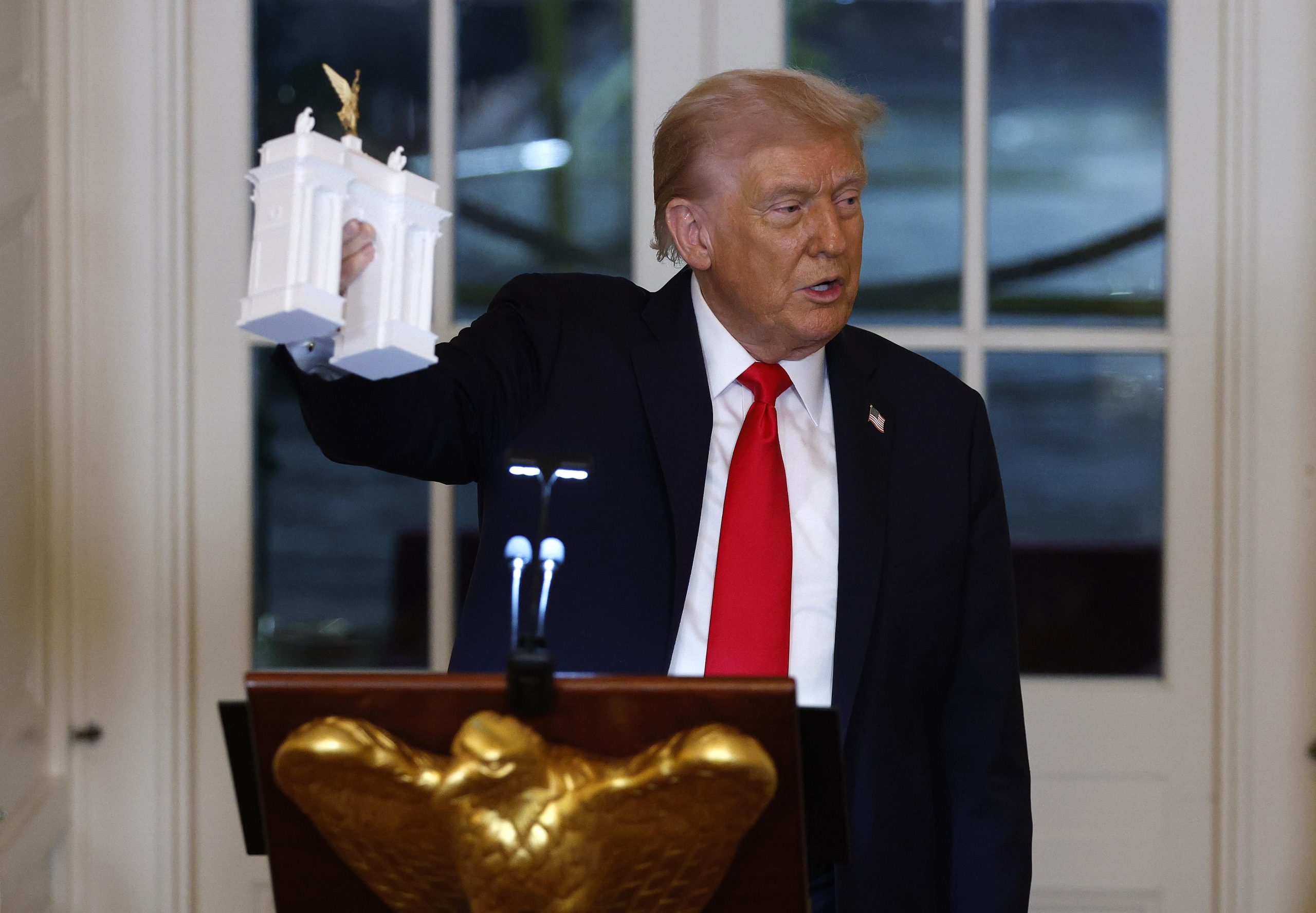
Donald Trump’s vision for America’s 250th anniversary is taking shape, and it’s raising eyebrows, and potentially, the Washington D.C. skyline. The Commission of Fine Arts recently approved plans for a colossal 250-foot-tall triumphal arch near Arlington National Cemetery, a project championed by the former president. While intended to commemorate the nation’s milestone, critics argue the arch is more about solidifying Trump’s legacy than honoring American history.
A Monumental Vision or a Mismatch?
The sheer scale of the proposed arch is generating significant debate. Towering over the surrounding landscape, the structure would dramatically alter the carefully preserved skyline near Arlington. Detractors worry that its imposing presence will detract from the solemnity and historical significance of the cemetery. The project’s proximity to such a hallowed ground has amplified concerns about its appropriateness and potential impact on the area’s character.
The Commission’s Role and Trump’s Influence
The Commission of Fine Arts’ approval has fueled speculation about political influence. Critics point to the commission’s perceived eagerness to endorse Trump’s vision, raising questions about its independence and objectivity. Trump himself has suggested the arch would not only celebrate America’s anniversary but also serve as a tribute to his own presidency. This self-referential aspect has added another layer of controversy to the project, further blurring the line between national commemoration and personal glorification.
A Divisive Legacy?
The proposed arch epitomizes the polarizing nature of Trump’s legacy. While supporters may see it as a grand gesture befitting America’s strength and resilience, opponents view it as an ego-driven project that disregards historical context and aesthetic harmony. As the project moves forward, it is likely to remain a focal point of contention, embodying the deep divisions that continue to shape American politics and public discourse.
In conclusion, Trump’s proposed triumphal arch is more than just a construction project; it’s a symbol laden with political implications and cultural significance. Its fate will not only determine the future of the Washington D.C. skyline but also reflect the ongoing debate about how America chooses to remember its past and shape its future.
Based on materials: Vox



