
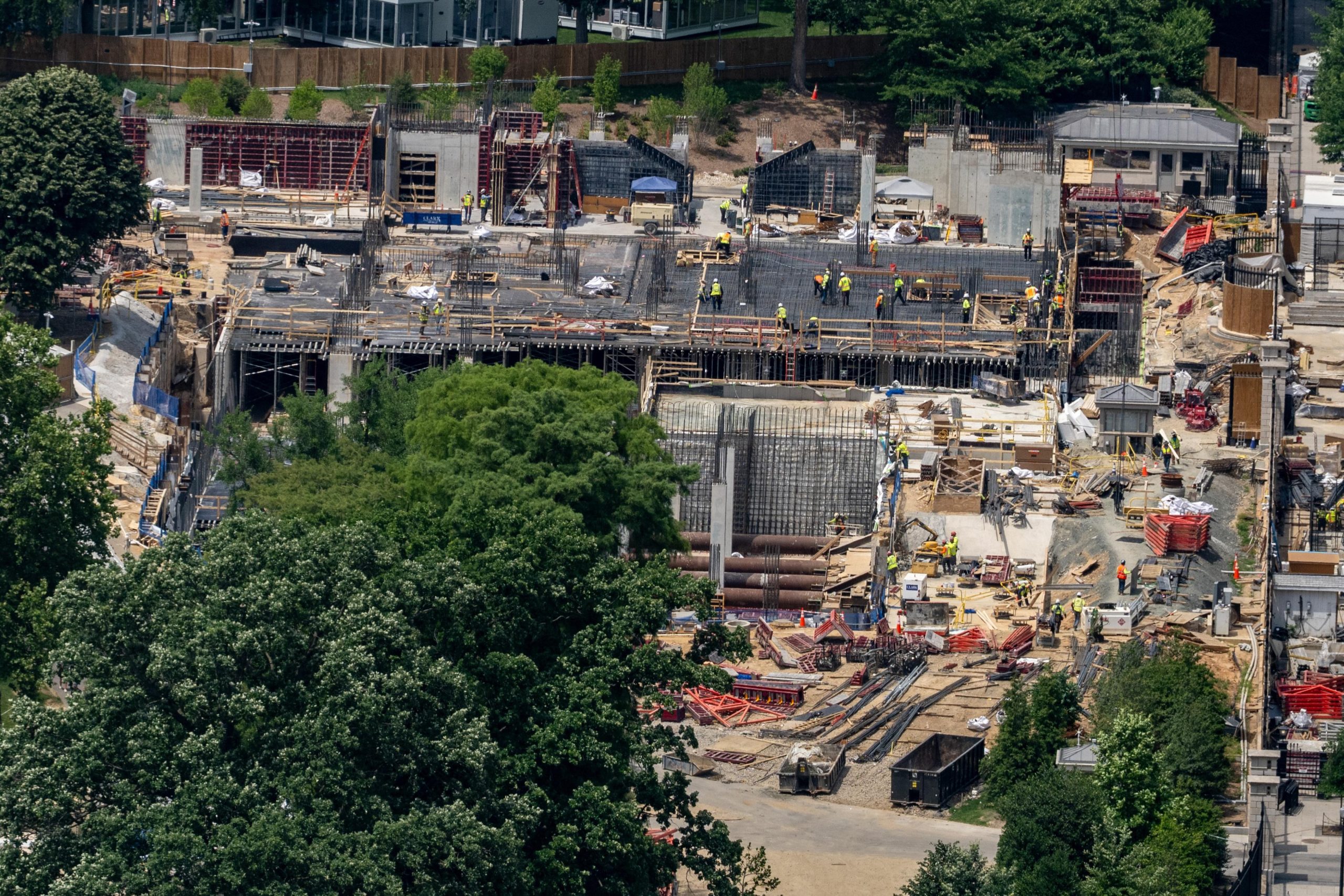

The opulent additions to the White House are becoming increasingly costly, with new reports revealing that taxpayers are now footing a significant portion of the bill for a lavish ballroom project initiated by former President Donald Trump. The ambitious construction, located on the site of the former East Wing, has seen its estimated price tag balloon to an astonishing $600 million.
This latest revelation, detailed in a Washington Post report, marks a substantial increase from previous cost estimates and directly contradicts earlier assurances that the project would be fully funded by private donations. Instead, it appears that more than half of this monumental expense will be borne by American taxpayers, raising questions about fiscal responsibility and the prioritization of public funds.
Escalating Costs and Shifting Funding
The construction of this elaborate ballroom has been a subject of ongoing scrutiny. Initially conceived as a grand enhancement to the White House, the project’s financial scope has continually expanded. The current $600 million figure represents a significant escalation, and the revelation that taxpayer money is a primary funding source has ignited public debate. This starkly contrasts with prior statements made by the Trump administration, which emphasized private fundraising efforts to cover the costs. The shift in funding strategy raises concerns about transparency and accountability in the allocation of public resources for such high-profile, and arguably non-essential, projects.
A Legacy of Lavish Spending?
The ballroom project is not an isolated incident. Throughout his presidency, Donald Trump was often associated with grand gestures and ambitious construction plans. This latest financial revelation adds another layer to discussions about his administration’s spending priorities. While proponents might argue for the historical significance or functional enhancements the ballroom could provide, critics point to the immense cost and the burden placed on taxpayers, especially during times of economic uncertainty or competing public needs. The substantial investment in this single project prompts a broader conversation about how public funds are utilized for presidential legacies and the perceived value of such endeavors.
Unanswered Questions and Public Scrutiny
As the construction continues, the substantial financial outlay for the White House ballroom is likely to remain a focal point of public and political discussion. The discrepancy between initial promises of private funding and the current reliance on taxpayer dollars invites further investigation into the financial management of the project. The sheer scale of the expenditure also necessitates a thorough examination of whether such an opulent addition aligns with the fiscal responsibilities owed to the American people. The ongoing saga of Trump’s ballroom underscores the complex interplay between presidential ambition, public funding, and the enduring scrutiny that accompanies significant government expenditures.
Based on materials: Vox



