
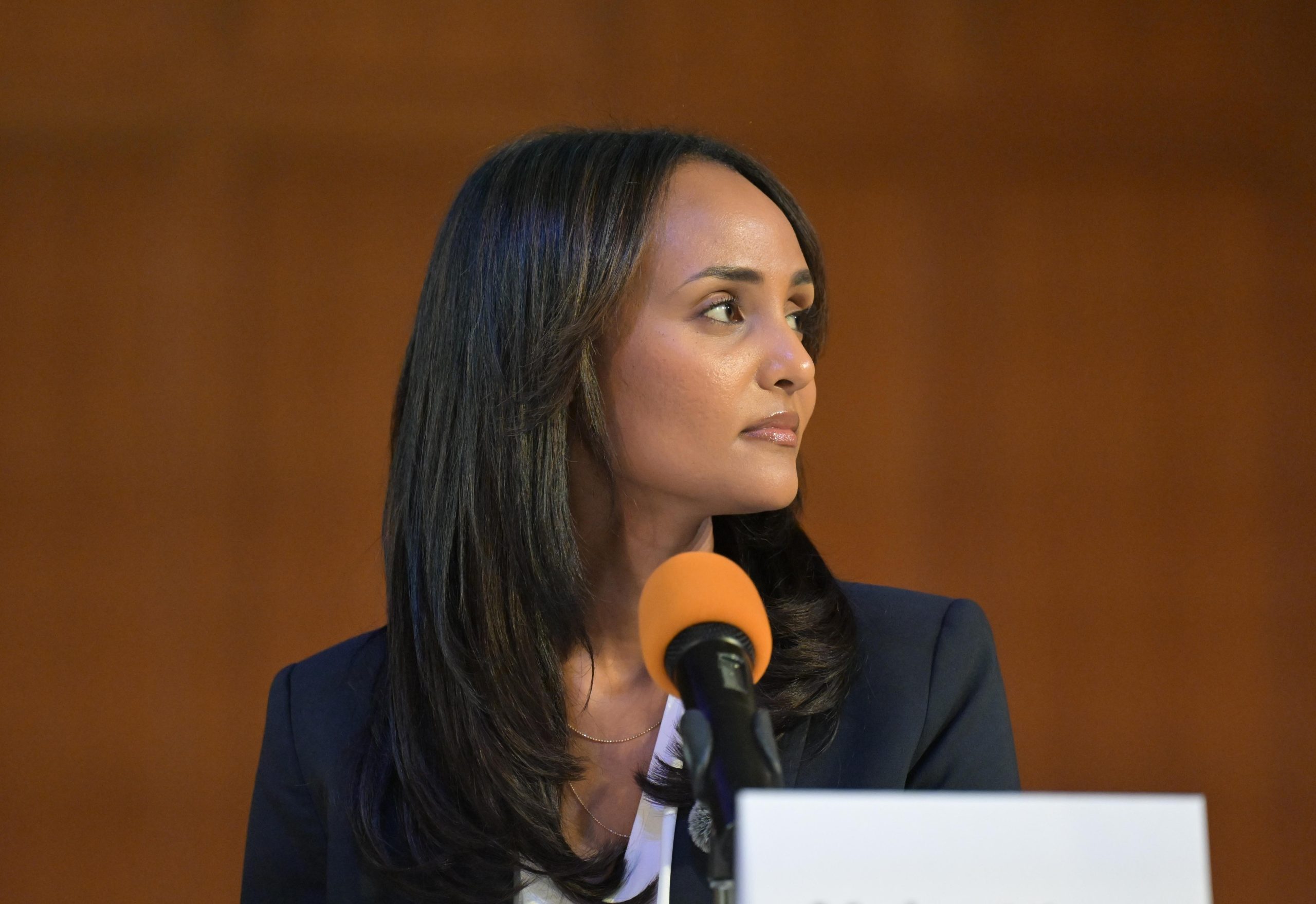
The political landscape of Colorado’s First Congressional District is set to become a battleground for the soul of the Democratic Party this month, as challenger Melat Kiros takes on long-serving incumbent Diana DeGette. Kiros’s nascent political career, ignited by a controversial stance on Israeli policy, highlights a growing ideological rift within the party, making this seemingly local race a potential barometer for broader Democratic civil war.
A Career-Altering Stance
Kiros, a 26-year-old former attorney, found herself at a career crossroads in November 2023. Her professional life took a sharp turn when she publicly challenged a letter signed by major U.S. law firms denouncing antisemitism and “calls for the elimination of the Israeli state.” While condemning bigotry, Kiros’s rebuttal argued that the “geopolitical legitimacy of the Israeli state” warranted scrutiny. This stance, amplified by its viral spread, led to her swift dismissal from her firm. This pivotal moment, however, appears to have been the catalyst for her entry into politics, transforming a career setback into a platform for her deeply held beliefs.
Challenging the Incumbent on a Moral Imperative
Now, Kiros is aiming for a seat in Congress, challenging Representative Diana DeGette, a Democratic stalwart who has represented Colorado’s First District for three decades. At the heart of Kiros’s campaign is a platform advocating for the cessation of all aid to Israel, a position she articulates as “the moral question of our time.” Her candidacy taps into a growing segment of the Democratic electorate increasingly critical of U.S. foreign policy, particularly concerning the Israeli-Palestinian conflict. The primary election in Colorado will serve as a critical test for how mainstream Democratic voters respond to such a progressive and ethically driven challenge to established foreign policy.
A Microcosm of a Larger Divide
The race between Kiros and DeGette transcends local politics. It represents a broader internal debate within the Democratic Party, grappling with issues of identity, foreign policy, and the definition of progressive values. Kiros’s narrative, born from a public stand that cost her dearly, embodies a willingness to challenge established norms and policies, even at significant personal cost. As voters in Colorado’s First District head to the polls, their decision will not only shape the future of their district but also offer valuable insight into the evolving ideological currents that are defining the Democratic Party’s ongoing internal dialogue and its path forward. The outcome could signal whether a new generation of progressive voices, driven by moral convictions, can successfully challenge established leadership within the party.
Based on materials: Vox



