
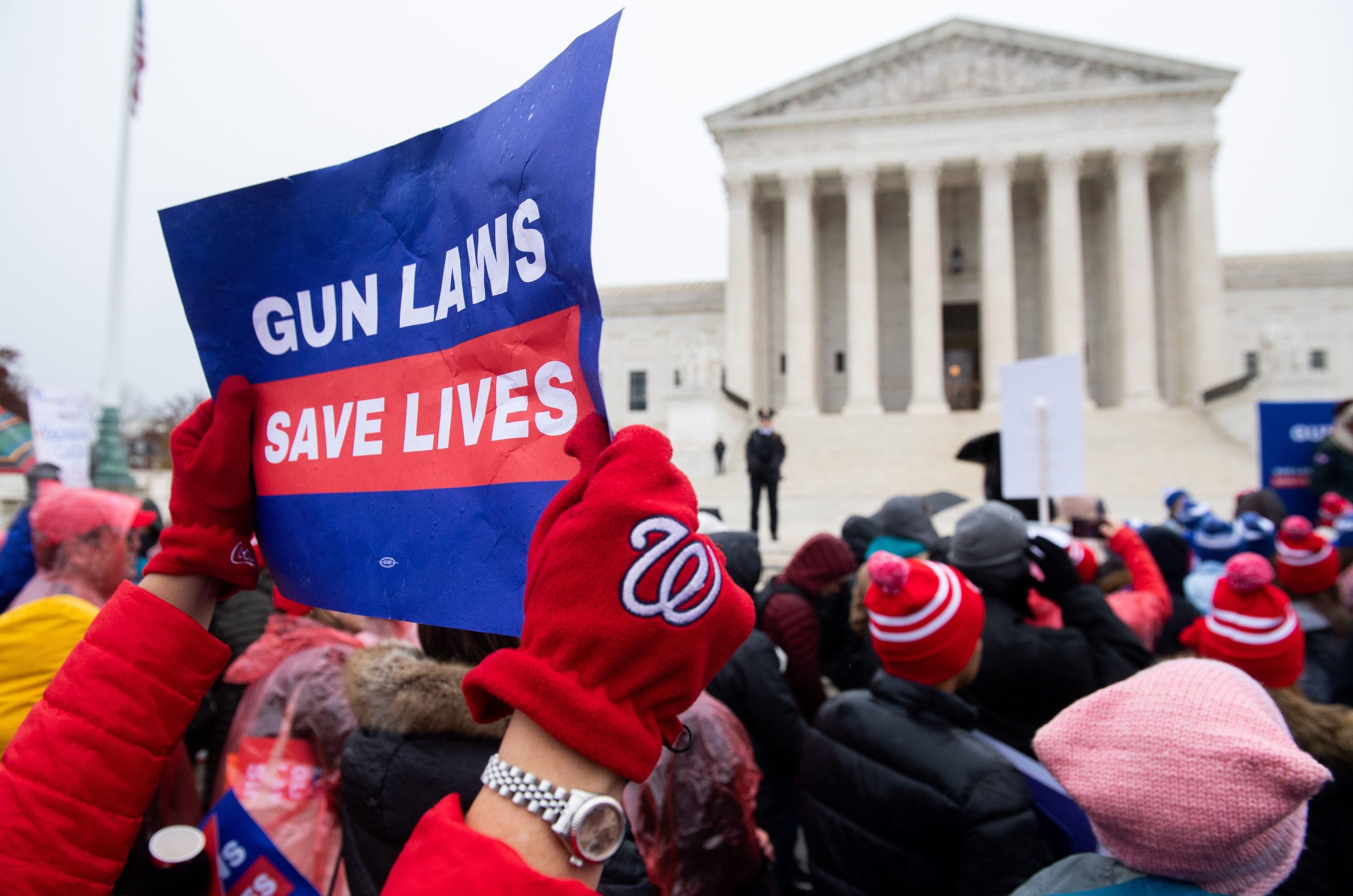
The Supreme Court has once again weighed in on Second Amendment rights, this time striking down a Hawaii gun law that restricted the carrying of firearms in public. The decision in
Wolford v. Lopez
, decided along predictable party lines, underscores the deeply divided judicial landscape surrounding gun regulation in the United States. This ruling, authored by Justice Samuel Alito, builds upon the framework established in the controversial
New York State Rifle & Pistol Association v. Bruen
decision from 2022, further solidifying a conservative interpretation of the Second Amendment.
A Shift in Gun Rights Interpretation
The heart of the
Wolford v. Lopez
decision lies in its reassertion of the
Bruen
standard, which significantly altered how courts evaluate gun control measures. Prior to
Bruen
, courts often employed a two-step process, balancing an individual’s right to bear arms against the government’s interest in public safety. However,
Bruen
mandated a historical-textual analysis, requiring that any regulation be consistent with the nation’s historical tradition of firearm regulation. This approach has been a cornerstone of recent conservative legal victories, leading to the overturning of numerous state and local gun laws.
Justice Alito’s majority opinion in
Wolford v. Lopez
found that Hawaii’s law, which required individuals to demonstrate a “proper reason” for carrying a firearm publicly, was inconsistent with this historical standard. The Court determined that such a requirement placed an undue burden on the Second Amendment right, effectively demanding a justification for self-defense that the historical record, as interpreted by the majority, did not support. This interpretation has drawn sharp criticism from legal scholars and gun control advocates who argue it unduly restricts the ability of states to enact common-sense safety measures.
Judicial Divide and Future Implications
The 6-3 decision in
Wolford v. Lopez
reflects the ideological chasm within the Supreme Court, with the conservative justices largely aligning with the Republican Party’s stance against stricter gun control and the liberal justices supporting the Democratic Party’s emphasis on regulation. This pattern has become a hallmark of Second Amendment jurisprudence in recent years, raising concerns about the Court’s perceived politicization. Justice Ketanji Brown Jackson, in a dissenting opinion, highlighted the extensive criticism of the
Bruen
decision from within the federal judiciary itself, quoting numerous lower court opinions that have struggled to apply its demanding historical test.
The implications of
Wolford v. Lopez
extend far beyond Hawaii. By reinforcing the
Bruen
precedent, the decision provides a potent legal weapon for challenging gun laws across the nation. States that previously relied on a more flexible approach to gun regulation may find their statutes vulnerable to legal challenges based on historical interpretations of the Second Amendment. This could lead to a significant rollback of gun control measures, even those widely supported by the public, and further intensify the ongoing national debate over gun violence and public safety.
A Contentious Path Forward
The Supreme Court’s consistent leanings in Second Amendment cases, particularly following
Bruen
, suggest a deliberate effort to reshape the legal landscape of gun rights. While proponents of the
Wolford v. Lopez
decision herald it as a victory for individual liberty, opponents view it as a dangerous impediment to public safety. As legal battles over gun control continue to unfold, the Supreme Court’s interpretation of the Second Amendment will undoubtedly remain a central and contentious issue, shaping the future of firearm regulation in the United States for years to come.
Based on materials: Vox



