
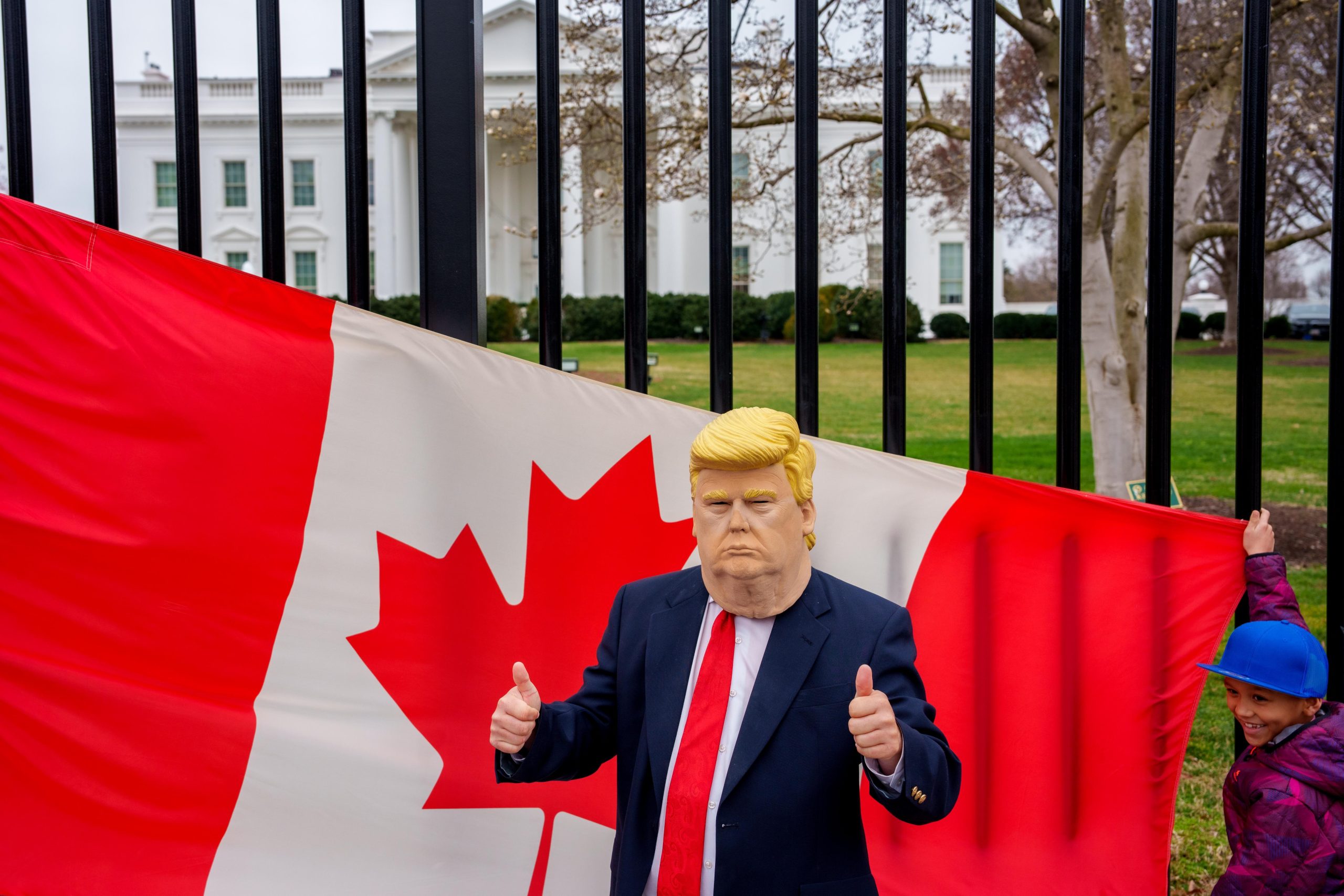
President Donald Trump appears determined to escalate trade tensions with Canada, recently threatening an aggressive 50% tariff on the nation’s auto sector. This proposed measure, layered atop existing tariffs, has sent ripples of concern through an industry deeply intertwined across both borders. The move, seemingly driven by an unclear objective, risks significant economic repercussions for both the United States and Canada.
The rationale behind this escalating trade war remains a subject of intense speculation. While the White House’s actions have undoubtedly stirred frustration in Canada, the intensity and seemingly arbitrary nature of these threats are notable, even by Trump’s own playbook. The auto industry, in particular, stands as a critical nexus of cross-border economic activity. The integrated supply chains mean that substantial duties would inflict considerable damage on manufacturers and workers on both sides of the border. This isn’t a situation where one nation stands to gain significantly at the other’s expense; rather, it’s a scenario where both economies are poised to suffer.
Economic Interdependence Under Threat
The North American auto industry is a prime example of deeply integrated global supply chains. Vehicles manufactured in Canada often incorporate a significant percentage of American-made components, and vice versa. This intricate web of production means that imposing hefty tariffs on Canadian auto imports would inevitably lead to increased costs for American consumers, potentially impacting sales and profitability for U.S. automakers. Furthermore, retaliatory measures from Canada could disrupt the flow of essential parts and vehicles, creating widespread uncertainty and operational challenges for businesses on both sides. Experts have pointed out that such a move could destabilize an already delicate economic balance, potentially leading to job losses and reduced investment in a sector crucial to the economic health of both nations.
Beyond Tariffs: A Broader Pattern of Disruption?
Beyond the immediate threat to the auto industry, Trump’s pronouncements, including musings about renaming Lake Ontario “Lake America” and renewed “jokes” about absorbing Canada as the 51st state, suggest a broader pattern of disruptive rhetoric. While such statements may be intended to provoke or assert dominance, they risk alienating a key trading partner and ally. Unlike some of Trump’s more unconventional foreign policy stances, which often have dedicated think tanks advocating for them, this particular trade conflict appears to lack widespread support or a clear strategic benefit. The palpable frustration on the ground in Canada underscores the negative sentiment generated by these actions, suggesting that the intended audience for these aggressive tactics may be limited.
Conclusion: A Costly Conflict for All
The current trajectory of the trade war between the United States and Canada, particularly concerning the auto sector, is fraught with risk. The deep economic ties between the two nations mean that escalating tariffs are unlikely to yield a decisive victory for either side. Instead, they threaten to disrupt vital supply chains, increase costs for consumers and businesses, and damage a crucial bilateral relationship. The lack of clear justification and broad-based support for this conflict raises questions about its long-term viability and potential consequences. As the situation unfolds, the economic fallout for both countries could be substantial, impacting jobs, investment, and overall economic stability.
SOURCE INFORMATION:
TITLE: Nobody wants this trade war with Canada
DESCRIPTION: LONDON, Ontario — President Donald Trump seems dead set on escalating his trade war with Canada. And no one is really sure why. On Monday, Trump threatened another round of 50 percent tariffs on top of the ones he just implemented — this one targeting Canada’s auto industry, which is so deeply integrated with its American counterpart […]
CONTENT: LONDON, Ontario — President Donald Trump seems dead set on escalating his trade war with Canada. And no one is really sure why. On Monday, Trump threatened another round of 50 percent tariffs on top of the ones he just implemented — this one targeting Canada’s auto industry, which is so deeply integrated with its American counterpart that large duties would do major damage on both sides of the border. By Tuesday morning, he had begun musing about renaming Lake Ontario “Lake America” to spite Canadians. And throughout all of this, he and Vice President JD Vance had renewed their “jokes” about absorbing Canada as the 51st state. But who is this even for? While the White House’s behavior infuriates Canadians — it is palpable on the ground here in Canada — it’s unusual by Trump standards in that nobody seems to want this conflict but him. Even the most fringe, or unpopular, foreign policy ideas he’s pursued typically have think tanks devoted to pushing them,
SOURCE: Vox
Based on materials: Vox



