
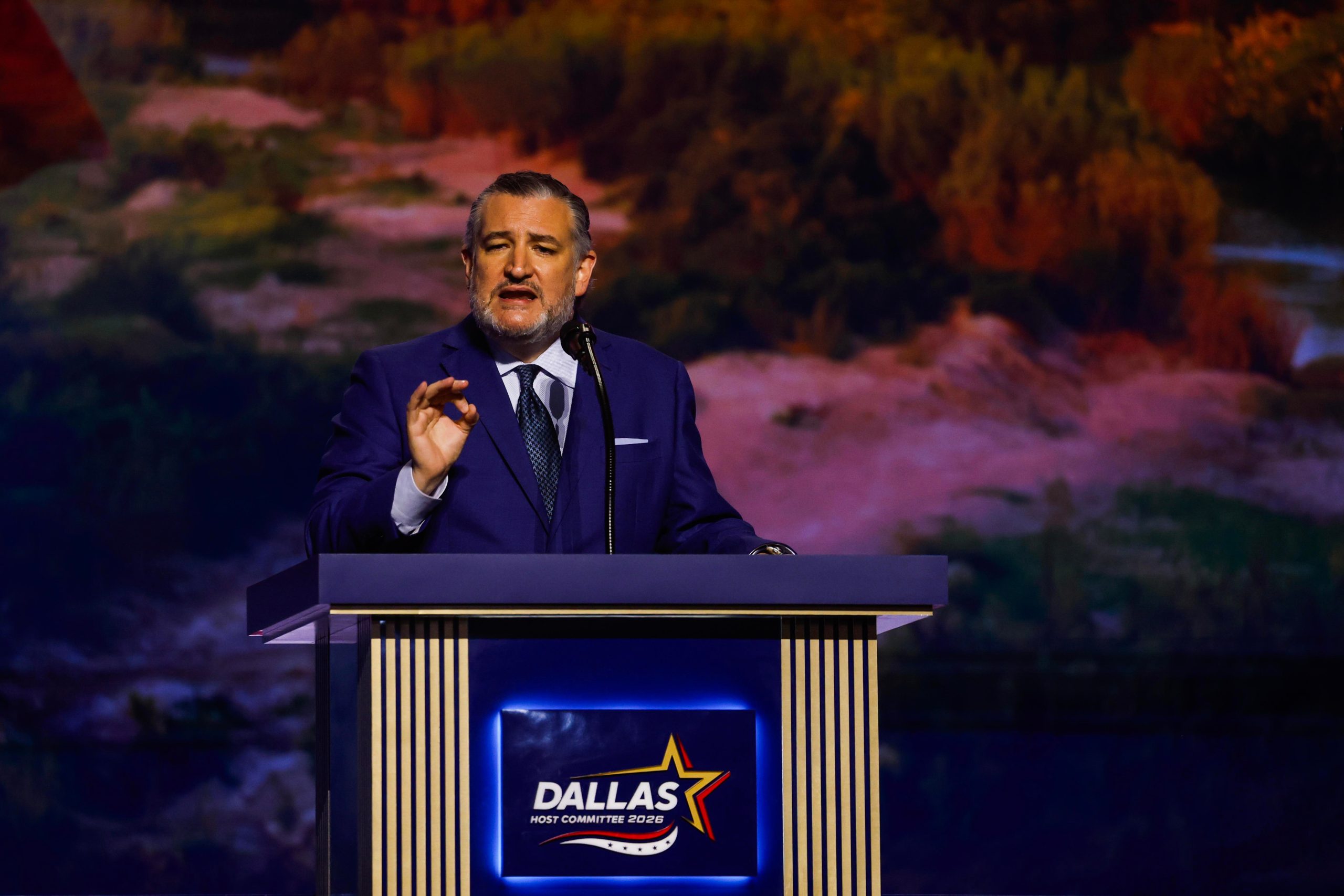
The Republican Party’s embrace of anti-Muslim messaging has reached a new crescendo, with the sentiment taking center stage at the party’s recent midterm convention in Dallas, Texas. Speakers at the event sounded alarms about a supposed “red-green alliance” between leftists and “Islamists,” framing this coalition as a grave threat to American values and institutions.
A “Dangerous Alliance” Unveiled
Senator Ted Cruz (R-TX) articulated this concern to convention attendees, warning of a convergence between communists and Islamists who, in his view, are actively undermining the Democratic Party. “They are united because they share the same enemies,” Cruz declared. “They hate Christians. They hate Jews. They hate capitalism. They hate the Constitution. And they hate America.” This rhetoric paints a broad, conspiratorial picture, linking disparate ideological groups under a shared banner of animosity towards core American tenets.
The convention’s agenda appeared to provide a platform for these narratives to flourish. By framing opposition to certain political ideologies as inherently tied to religious or ethnic identity, the party risks alienating significant segments of the population and deepening societal divisions. The strategic deployment of such language, particularly in the lead-up to elections, suggests a calculated effort to mobilize a specific base of voters by invoking fear and suspicion.
Targeting Candidates with Divisive Claims
The polarizing rhetoric extended beyond broad pronouncements. Former Representative Mike Rogers, currently a Republican Senate candidate in Michigan, reportedly employed accusations linking his opponent, Abdul El-Sayed, to the 9/11 attacks. This strategy of associating a political opponent with a national tragedy, particularly one with deep Islamophobic undertones, highlights a more targeted and personal application of the anti-Muslim sentiment. Such tactics can have a profound impact on public perception, often relying on prejudice rather than substantive policy debate.
The use of such divisive claims in political campaigns is not new, but its prominence at a major party convention signals a normalization of these themes within the GOP. The implication is that this approach is seen as an effective electoral strategy, even if it comes at the cost of fostering division and potentially inciting discrimination. This trend raises questions about the long-term implications for political discourse and the health of democratic institutions.
Analysis and Context
The amplified anti-Muslim rhetoric at the GOP convention is part of a broader trend observed in recent years, where anti-immigrant and anti-Muslim sentiments have been increasingly voiced by elected Republican officials. This convention marks a significant moment where these sentiments moved from the fringes to the forefront of the party’s public messaging.
The “red-green alliance” framing is a familiar trope in certain conservative circles, often used to draw parallels between far-left ideologies and Islamist movements. However, its explicit endorsement at a national party gathering suggests a deliberate effort to integrate this narrative into mainstream Republican discourse. This can be seen as a tactic to galvanize conservative voters by identifying and demonizing perceived common enemies, thereby fostering a sense of unity and purpose within the party base.
The implications of this sustained focus on anti-Muslim messaging are far-reaching. It risks not only alienating Muslim Americans and exacerbating Islamophobia but also contributing to a broader climate of intolerance and division within society. Furthermore, by framing political opposition through the lens of religious or ethnic identity, it can undermine nuanced policy discussions and encourage a more tribalistic approach to politics. The long-term consequences for the Republican Party’s electoral prospects and its role in a diverse democracy remain to be seen.
Based on materials: Vox



