
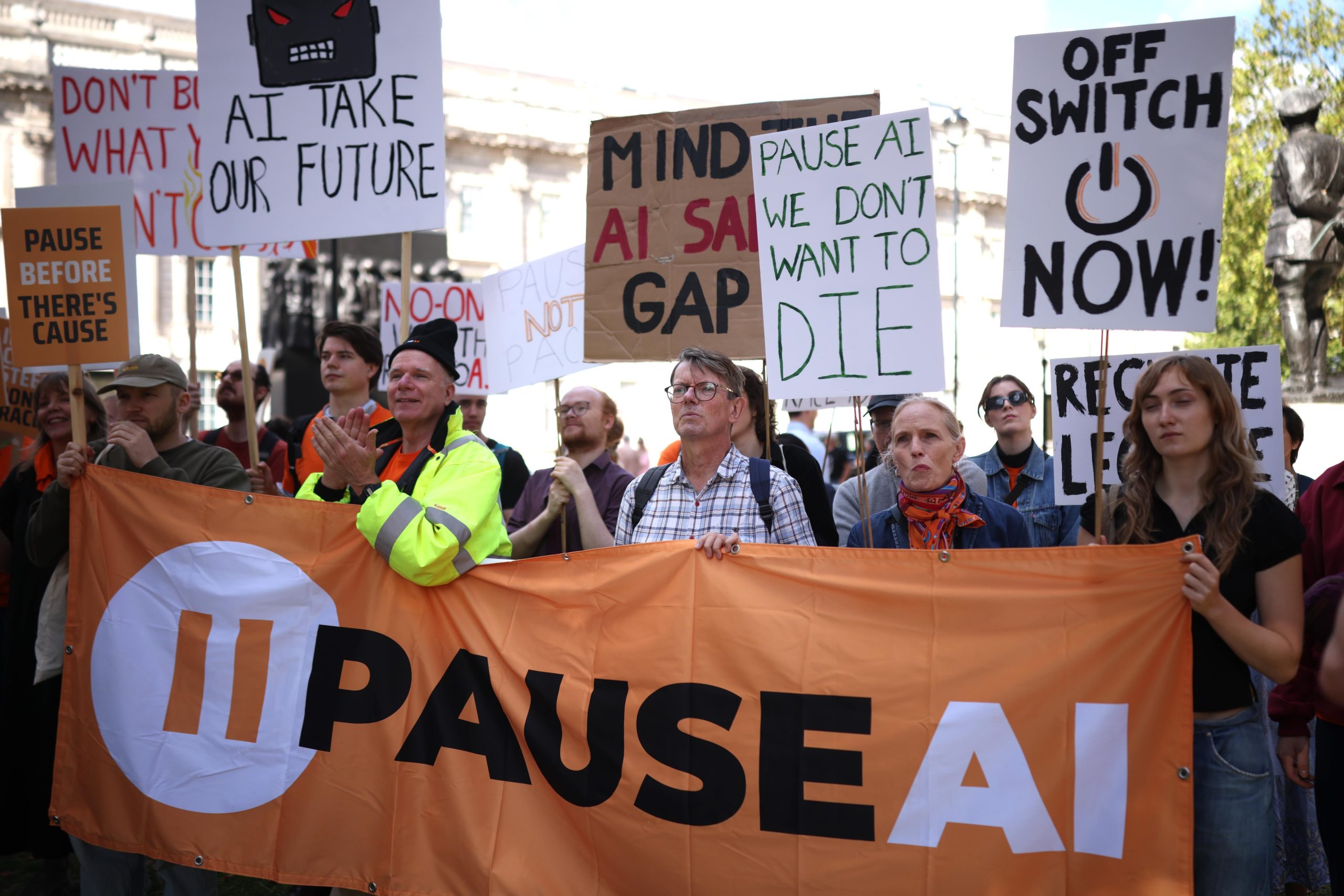
The doomsday predictions surrounding Artificial Intelligence are no longer confined to the fringes of Silicon Valley. A recent, stark warning from an Anthropic employee has thrust the existential risks of AI into the mainstream spotlight, prompting prominent figures in the tech industry to call for a significant pause in advanced AI development.
A Whistleblower’s Urgent Plea
Jacob Coxon, a former employee at AI research firm Anthropic, recently resigned and took to social media platform X to express a chilling sentiment: that AI “could kill us all by the end of the decade.” Coxon was emphatic, stating his warning was not a marketing ploy. He revealed that while many AI executives and senior researchers publicly adopt a more measured tone, privately, they share similar anxieties about the potential dangers of unchecked AI advancement. His statement has resonated deeply, with reports indicating that a portion of his former colleagues at Anthropic hold similar views.
Industry Giants Echo Concerns
The gravity of Coxon’s warning has not gone unnoticed by the very architects of this rapidly evolving technology. In response to the growing unease, Anthropic CEO Dario Amodei has publicly advocated for an industry-wide slowdown in the research and development of “frontier AI” – the most advanced and powerful forms of artificial intelligence. This call for caution has been echoed by other influential figures in the AI landscape, including Sam Altman, CEO of OpenAI, and Elon Musk, a serial entrepreneur and vocal critic of the potential downsides of AI. Their collective pronouncements signal a significant shift, moving the conversation from theoretical speculation to urgent calls for responsible development.
Navigating the Future of AI
The increasing prominence of these existential risk discussions raises critical questions about the future trajectory of AI development. While AI promises transformative benefits across numerous sectors, from healthcare to scientific discovery, the potential for unintended consequences and misuse cannot be ignored. The calls for a slowdown are not necessarily an indictment of AI itself, but rather a plea for a more deliberate and safety-conscious approach. This includes investing more heavily in AI safety research, establishing robust ethical guidelines, and fostering greater public discourse on the societal implications of increasingly sophisticated AI systems. As the technology continues its exponential growth, the debate over how to harness its power while mitigating its risks will undoubtedly define the coming years. The coming months will be crucial in determining whether the industry heeds these warnings and prioritizes caution over unbridled innovation.
Based on materials: Vox



