
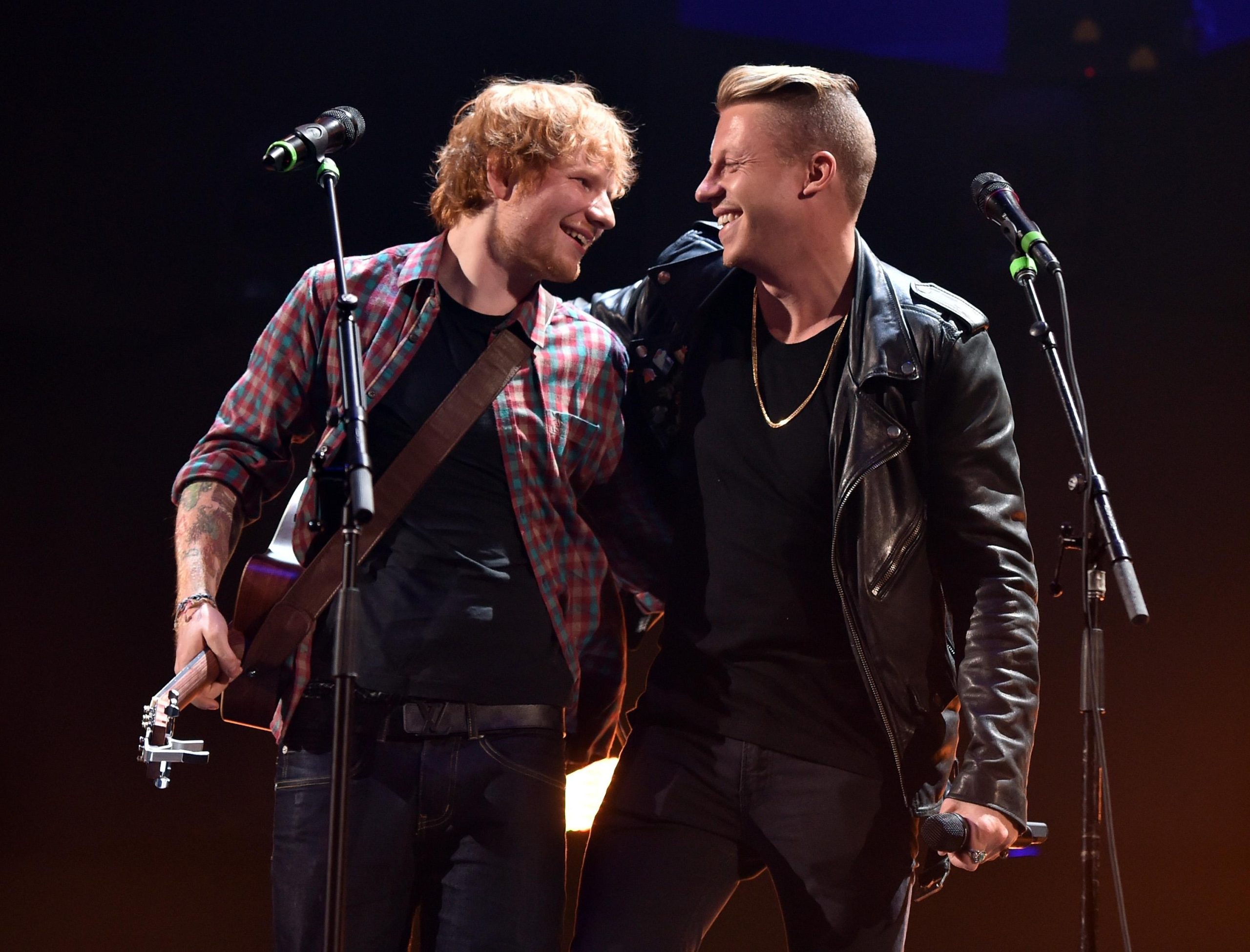
A seemingly minor disagreement at a Boston Celtics game has unexpectedly ignited a fiery debate surrounding the Israel-Palestine conflict, pulling in global music sensations Ed Sheeran and Macklemore. What began as a cryptic Slack message for one journalist has unraveled into a complex web of concert cancellations, fan outrage, and political commentary, highlighting how deeply intertwined entertainment and global issues can become.
The unexpected controversy traces back to Robert Kraft, the billionaire owner of the New England Patriots, and his involvement with the “Stand With Us” organization, a pro-Israel advocacy group. Kraft reportedly invited Macklemore to a private event in Boston. However, upon learning of the rapper’s past support for pro-Palestinian causes, including his participation in a solidarity concert in Ramallah in 2014, Kraft allegedly rescinded the invitation. This decision, intended to avoid controversy, appears to have had the opposite effect.
The Streisand Effect in Action
The incident quickly gained traction online, with many fans and commentators accusing Kraft of attempting to suppress Macklemore’s views. This move, often referred to as the “Streisand Effect,” where an attempt to hide or remove information inadvertently draws more attention to it, backfired spectacularly. Instead of silencing Macklemore, the alleged cancellation brought his stance on the Israel-Palestine issue into sharp focus. Adding fuel to the fire, Ed Sheeran, who was scheduled to perform at a separate event with Macklemore in Boston, was also drawn into the vortex of the controversy. While Sheeran’s direct involvement remains less clear, his association with Macklemore in the context of this heated discussion meant he couldn’t escape the fallout.
Wider Implications and Fan Reactions
The situation has amplified the ongoing discourse around the Israel-Palestine conflict within the entertainment industry. Artists are increasingly finding themselves under scrutiny for their political stances, or perceived stances, with fans and advocacy groups on all sides of the issue demanding accountability. The incident serves as a stark reminder that in the age of hyper-connectivity and social media activism, a single decision or invitation can have far-reaching consequences, impacting not just an artist’s reputation but also the broader public conversation. The narrative has shifted from a simple concert announcement to a complex interplay of celebrity, activism, and geopolitical tensions, demonstrating the potent influence of music and its stars on global events.
The fallout from this situation continues to unfold, leaving fans to grapple with the intersection of their favorite artists’ careers and the pressing issues of the world. It underscores the delicate balance artists must strike between their creative expression and the potential for their platform to be interpreted through a political lens.
Based on materials: Vox



