
The seemingly innocuous hailstorm, a common annoyance for many, is a silent destroyer of property and a significant drain on the economy, with its costs set to escalate. In specialized cold laboratories, scientists like Anthony Bernal Ayala are meticulously dissecting hailstones, akin to reading the rings of a tree, to understand the complex atmospheric conditions that forge these frozen projectiles. This deep dive into hail formation is crucial as climate change intensifies these destructive weather events.
Decoding Hailstones: A Scientific Detective Story
At a chilling facility in Boulder, Colorado, where temperatures plummet to around minus 4 degrees Fahrenheit, atmospheric researchers are conducting vital research. Anthony Bernal Ayala, armed with a band saw, carefully slices through hailstones. The internal layers, a spectrum of clear and cloudy ice, tell a compelling story. Slow freezing creates clear ice, while rapid freezing traps air bubbles, resulting in cloudy layers. Beyond visual cues, the analysis extends to the crystalline structures, embedded particles, and isotopic composition preserved within the ice. “All that information can tell you a wonderful story of how the hail formed,” Bernal Ayala explains, highlighting the intricate details each stone holds about its atmospheric birthplace. This scientific exploration is not merely academic; it’s a critical step towards better predicting and mitigating the immense financial and personal toll of hail damage.
The Growing Economic and Social Impact
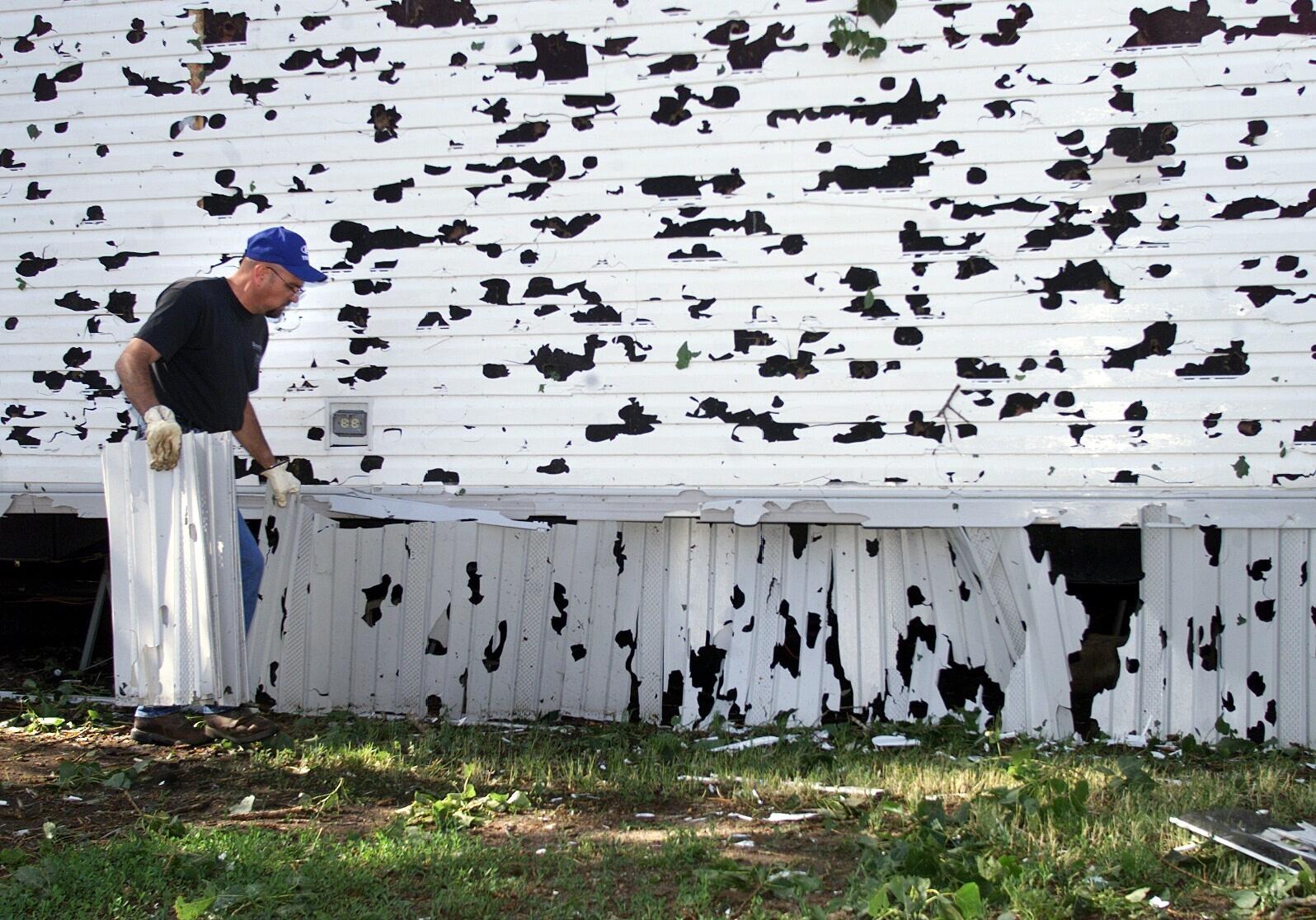
The economic repercussions of severe hailstorms are staggering. In Colorado, a state frequently battered by these events, the damage is palpable. Photographs depict the aftermath of intense hail and windstorms, showing a mobile home park in Watkins, Colorado, with damaged vinyl sheeting ripped from underneath homes. This scene is a stark reminder of the vulnerability of infrastructure and personal property to extreme weather. The insurance industry bears a significant portion of this financial burden, with billions of dollars paid out annually to cover damages. As the planet warms, the atmospheric conditions conducive to larger, more frequent, and more damaging hailstorms are becoming more prevalent. This escalating threat poses a significant challenge to homeowners, businesses, and insurers alike, demanding a proactive approach to adaptation and resilience.
Climate Change: Fueling the Hailstorm Fury
The scientific consensus points to a direct link between climate change and the increasing severity of hailstorms. Warmer atmospheric temperatures can hold more moisture, and the updrafts within thunderstorms, which are essential for hail formation, can become more powerful. This combination creates a perfect storm for larger and more destructive hailstones. The research being conducted in cold labs is vital for refining weather models and improving the accuracy of hail forecasts. By understanding the nuances of hail formation, scientists can provide earlier warnings and more precise predictions, allowing communities to better prepare and protect themselves. This proactive stance is essential to curb the billions of dollars lost annually and to safeguard lives and livelihoods from the escalating threat of extreme weather. The future of hail damage mitigation hinges on our ability to comprehend and respond to the changing climate.
Based on materials: Vox



