
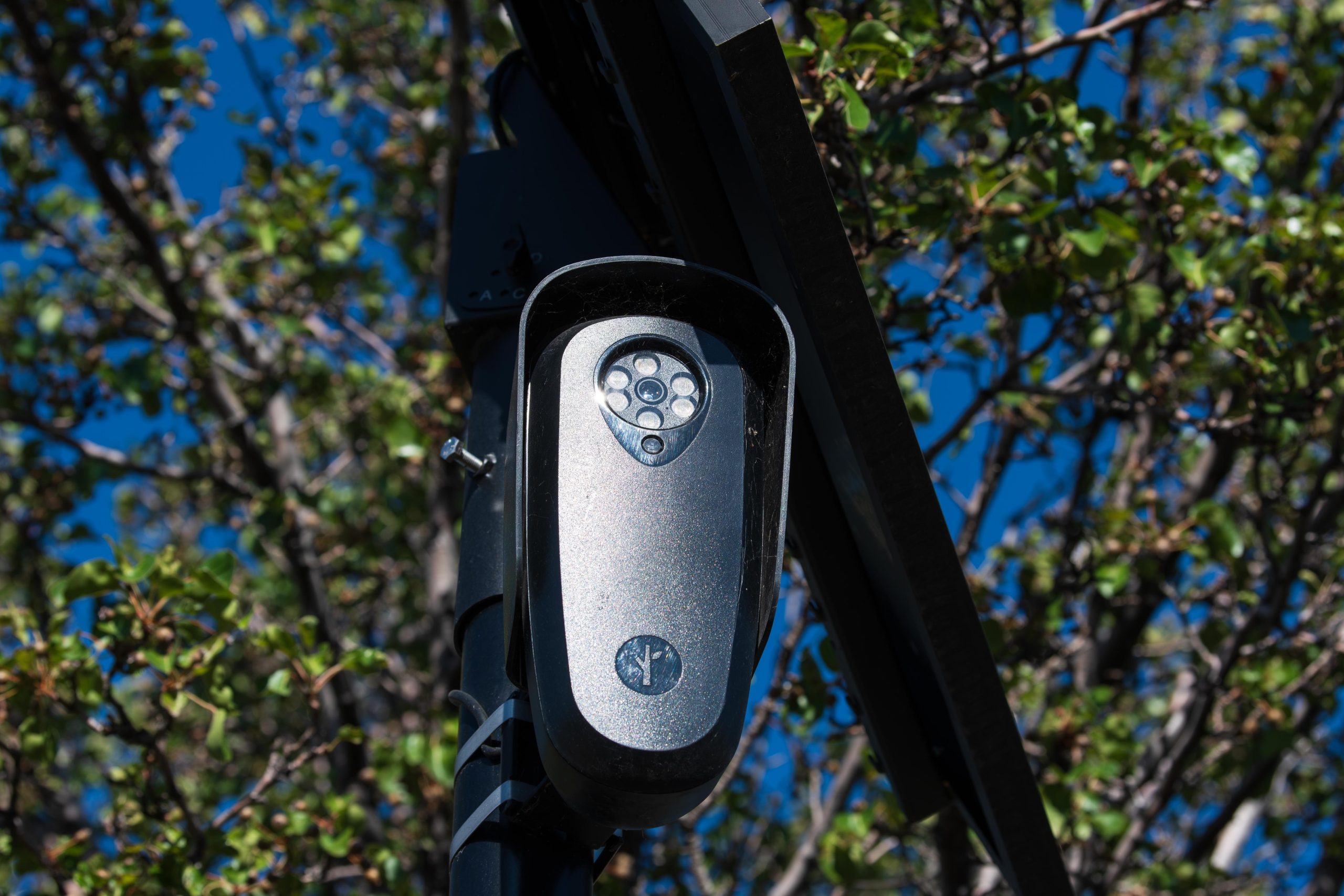
The pervasive presence of surveillance technology in American life is no longer a novelty. For years, closed-circuit television (CCTV) cameras have meticulously documented public movements, while smartphones have transformed individuals into potential subjects of unsolicited digital capture. However, a recent technological leap, driven by artificial intelligence, is now expanding the reach of government surveillance in the physical world, raising significant privacy concerns.
The Rise of Automatic License Plate Readers
At the forefront of this evolution is Flock, a company providing police departments with networks of surveillance cameras, most notably automatic license plate readers (ALPRs). These devices capture an image of every vehicle that passes them, extracting and recording the license plate number. While the concept of license plate scanning isn’t entirely new, the integration of AI transforms raw data into actionable intelligence, allowing law enforcement to trace vehicle movements with unprecedented efficiency. Previously, piecing together a vehicle’s journey would involve manually sifting through hours of footage from numerous cameras – a laborious and time-consuming task. AI-powered systems, however, can now perform these cross-referencing operations almost instantaneously, enabling police to track individuals’ movements with a speed and scope previously unimaginable.
Balancing Public Safety and Civil Liberties
The argument for widespread surveillance often centers on its potential to enhance public safety and aid in criminal investigations. Proponents suggest that ALPRs can be instrumental in locating stolen vehicles, identifying suspects in serious crimes, and even preventing potential threats by flagging suspicious vehicle activity. The ability to quickly track a vehicle’s path can drastically reduce response times and improve the chances of apprehending dangerous individuals. However, the ease with which these systems can monitor the comings and goings of ordinary citizens raises profound questions about privacy and civil liberties. Critics argue that the constant tracking of vehicles, even by law-abiding citizens, creates a chilling effect and could lead to a de facto surveillance state where every movement is recorded and potentially scrutinized. The potential for misuse, data breaches, or the expansion of surveillance beyond its initial intended purpose are also significant concerns that warrant careful consideration.
The Ongoing Debate and Future Implications
As AI continues to permeate surveillance technology, the debate surrounding its implementation is intensifying. While the benefits for law enforcement are undeniable, the erosion of privacy for the general public is a trade-off that many find unacceptable. The increasing sophistication of these systems necessitates a robust public discourse on how they are deployed, what data is collected, how it is stored, and who has access to it. Clearer regulations, stronger oversight, and greater transparency are crucial to ensure that the pursuit of public safety does not come at the expense of fundamental freedoms. The widespread adoption of technologies like Flock’s ALPRs signals a new era of surveillance, one that demands careful navigation to balance the promise of enhanced security with the imperative of protecting individual privacy.
SOURCE INFORMATION:
TITLE: Flock cameras are creepy. They might still be worth it.
DESCRIPTION: To no small extent, Americans have grown accustomed to being watched. For more than a decade, CCTV cameras have recorded a hefty portion of many people’s public movements, while ubiquitous smartphones have made us all perpetually vulnerable to unsolicited documentation (if not, social media notoriety). Until recently, however, technical limitations constrained the reach of government […]
CONTENT: Flock provides police departments with networks of surveillance cameras — primarily, automatic license plate readers that photograph each vehicle that passes them. | NurPhoto via Getty Images To no small extent, Americans have grown accustomed to being watched. For more than a decade, CCTV cameras have recorded a hefty portion of many people’s public movements, while ubiquitous smartphones have made us all perpetually vulnerable to unsolicited documentation (if not, social media notoriety). Until recently, however, technical limitations constrained the reach of government surveillance (at least, in the physical realm). Police may have been swimming in CCTV footage. But using such videos to track any given person’s movements was an extremely time-intensive endeavor. To do so, an officer would need to sift through hours of footage captured on many different cameras. Yet AI is now making it possible for the government to trace ordinary citizens’ movements with unprecedented ease a
SOURCE: Vox
Based on materials: Vox



