
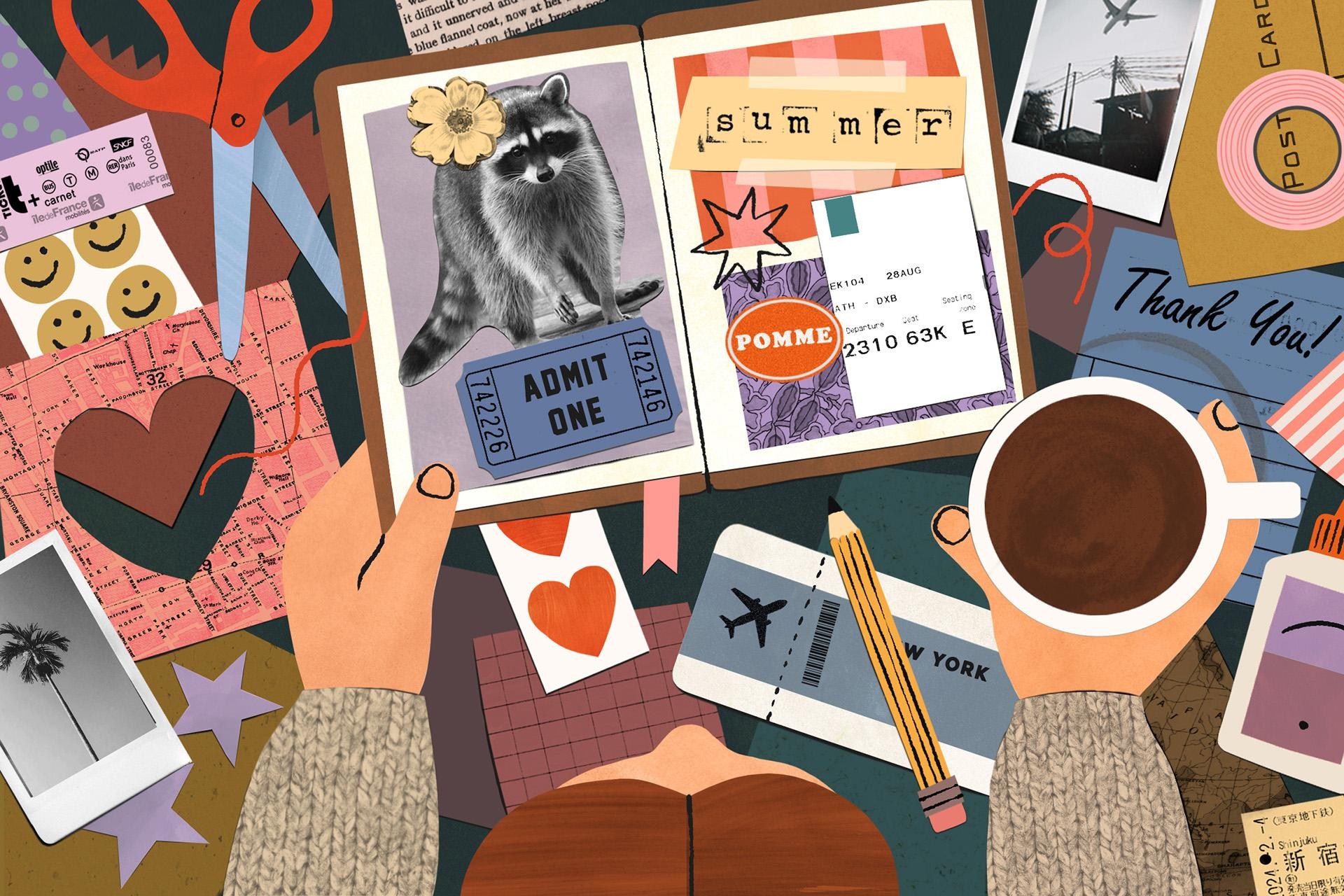
In a world saturated with digital distractions and the relentless tide of “doomscrolling,” a surprisingly analog antidote is gaining traction: junk journaling. This creative pursuit transforms everyday detritus into a vibrant tapestry of personal memories and artistic expression, offering a tangible escape from the overwhelming nature of modern life. Forget pristine scrapbooks; junk journaling embraces the beautifully imperfect, turning discarded ephemera into a source of both mindfulness and creative satisfaction.
The allure of junk journaling lies in its democratic nature. Unlike traditional art forms that might require specialized skills or expensive materials, this hobby invites participants to see the potential in the mundane. A glossy marker once used to identify a farmer’s market purchase, a receipt from a favorite restaurant, a political mailer, or even a crumpled concert program – these are the building blocks of a junk journal. The process begins with simply collecting these “scraps” of daily existence, items often destined for the landfill or recycling bin. The act of sifting through this personal archive can itself be a form of catharsis, a physical engagement with one’s own experiences.
From Trash to Treasure: The Art of Collage
At its core, junk journaling is a form of visual storytelling through collage. Participants take their collected ephemera and arrange them within the pages of a book, creating dynamic compositions. This can range from simple arrangements of ticket stubs and business cards to elaborate scenes built from magazine cutouts and printed photographs. The beauty of junk journaling is the absence of strict rules. There’s no “right” or “wrong” way to create. Some journals might be meticulously organized, while others embrace a more chaotic, layered aesthetic. The key is the transformation of discarded items into something visually engaging and personally meaningful. This hands-on process provides a much-needed break from the passive consumption of digital content, fostering a sense of agency and accomplishment.
A Digital Detox Through Tangible Creation
The therapeutic benefits of junk journaling are becoming increasingly recognized. In an era where screen time dominates our lives, the tactile experience of handling paper, glue, and various textures offers a grounding sensation. The focus required to select, cut, and arrange these physical elements can effectively pull individuals out of the cycle of anxious scrolling and into a state of mindful engagement. This creative outlet allows for the processing of emotions, memories, and experiences in a non-verbal, visual way. It’s a way to document life’s journey, both the significant milestones and the fleeting everyday moments, in a way that feels personal and deeply satisfying. The resulting journal becomes a unique artifact, a testament to the beauty found in the overlooked corners of our lives.
In conclusion, junk journaling offers a compelling alternative for those seeking a creative escape and a mindful practice. By embracing the “trash” of everyday life, individuals can craft a tangible, personalized narrative that fosters both artistic expression and a sense of well-being. It’s a reminder that inspiration can be found everywhere, and that even the most ordinary objects can be transformed into something extraordinary with a little imagination and a touch of glue.
Based on materials: Vox



