
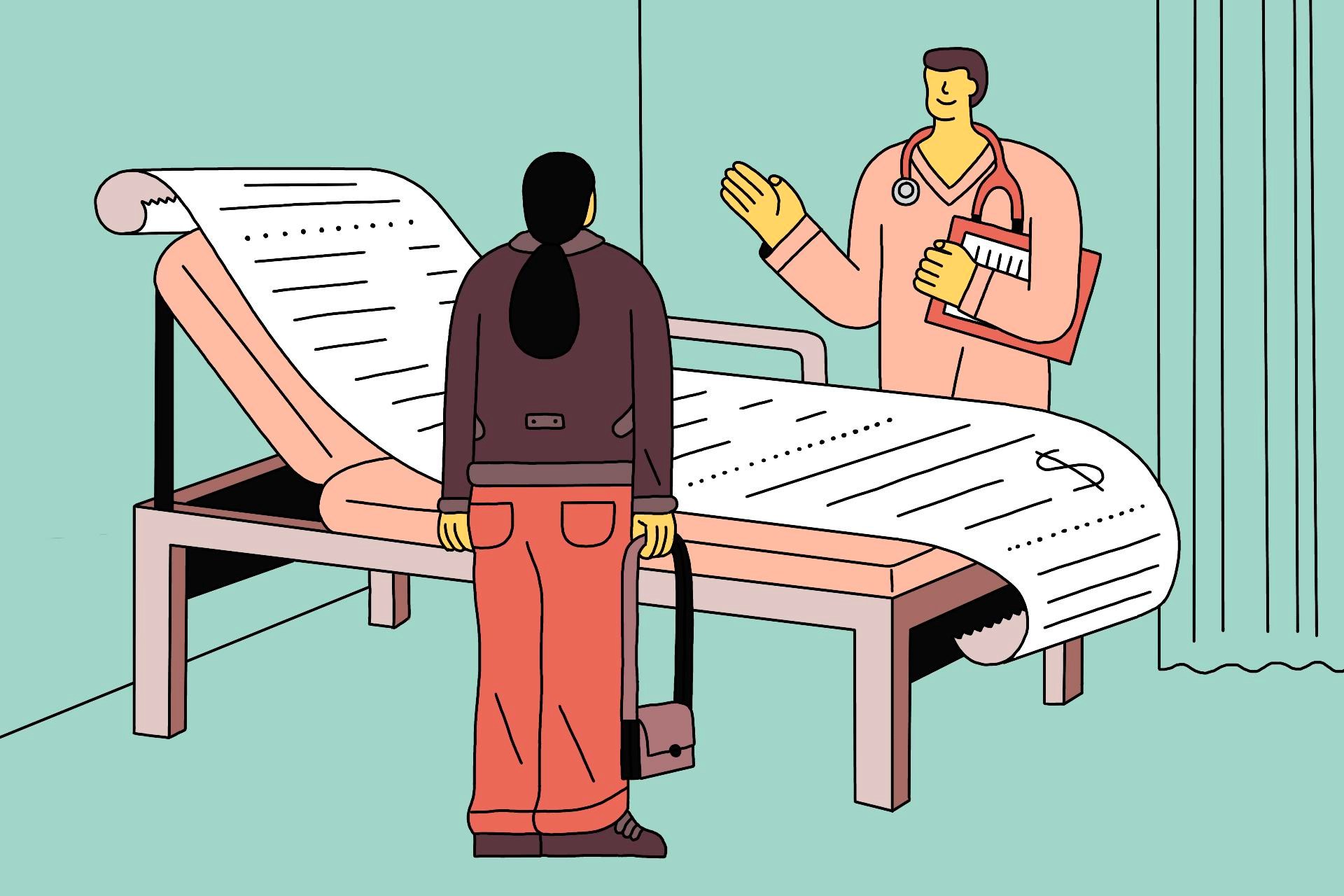
Many Americans enroll in health insurance plans with the promise of a free annual preventive care visit, a crucial benefit designed to catch potential health issues early. However, a growing number of individuals are discovering that this “free” visit often comes with an unexpected bill, leaving them confused and financially burdened.
Steve Kuo’s experience is a prime example. After moving to West Virginia and signing up for a new insurance plan costing $500 per month, he was looking forward to utilizing his entitled free preventive visit. He scheduled an appointment at a local clinic, expecting a straightforward check-up. However, during the consultation, his mention of a prior kidney condition led to the visit being reclassified by the clinic. Weeks later, Kuo received a bill charging him twice for the same appointment: once as the promised free preventive visit and again as an “office sick visit” due to the discussion about his medical history.
“No copayment means no copayment, exactly as stated in the insurance guidelines,” Kuo stated, expressing his frustration with the discrepancy. “What is written and agreed upon should be honored.” His sentiment is echoed by many others. Online forums and social media platforms reveal a consistent pattern of individuals facing similar surprise charges for appointments they believed were fully covered by their insurance as preventive care.
The Nuances of Preventive Care Billing
The core of the issue lies in the often-blurred lines between preventive care and diagnostic services. While annual physicals and screenings are typically covered without cost-sharing, any discussion of specific symptoms, pre-existing conditions, or the ordering of tests beyond routine preventive measures can prompt a clinic or doctor’s office to reclassify the visit. This reclassification often triggers copayments, deductibles, or coinsurance, transforming a “free” visit into a billable event.
Insurance companies generally define preventive care as services aimed at preventing illness or detecting it at an early stage before symptoms appear. This includes a wide range of screenings like mammograms, colonoscopies, and general physicals. However, the practical application of this definition by healthcare providers can be inconsistent. A provider might consider a patient’s mention of a headache during a preventive visit as a reason to conduct a diagnostic assessment, thus altering the nature of the service provided and its billing code.
Navigating the System and Advocating for Patients
For consumers, understanding the distinction between preventive and diagnostic care is crucial. Patients are advised to clarify with their healthcare providers before an appointment if they have any health concerns they wish to discuss, asking explicitly if these discussions might change the billing status of the visit. It’s also recommended to obtain a clear explanation of charges if a bill is received for a visit expected to be free.
Advocacy groups and consumer watchdogs are increasingly highlighting these billing practices, pushing for greater transparency from both insurance companies and healthcare providers. The intent of preventive care coverage, as established by legislation like the Affordable Care Act, is to remove financial barriers to essential health maintenance. When patients are unexpectedly charged, it undermines this objective and can discourage them from seeking necessary medical attention. As more stories like Steve Kuo’s emerge, the pressure to ensure that “free” preventive visits remain truly free for consumers is mounting.
Based on materials: Vox



