
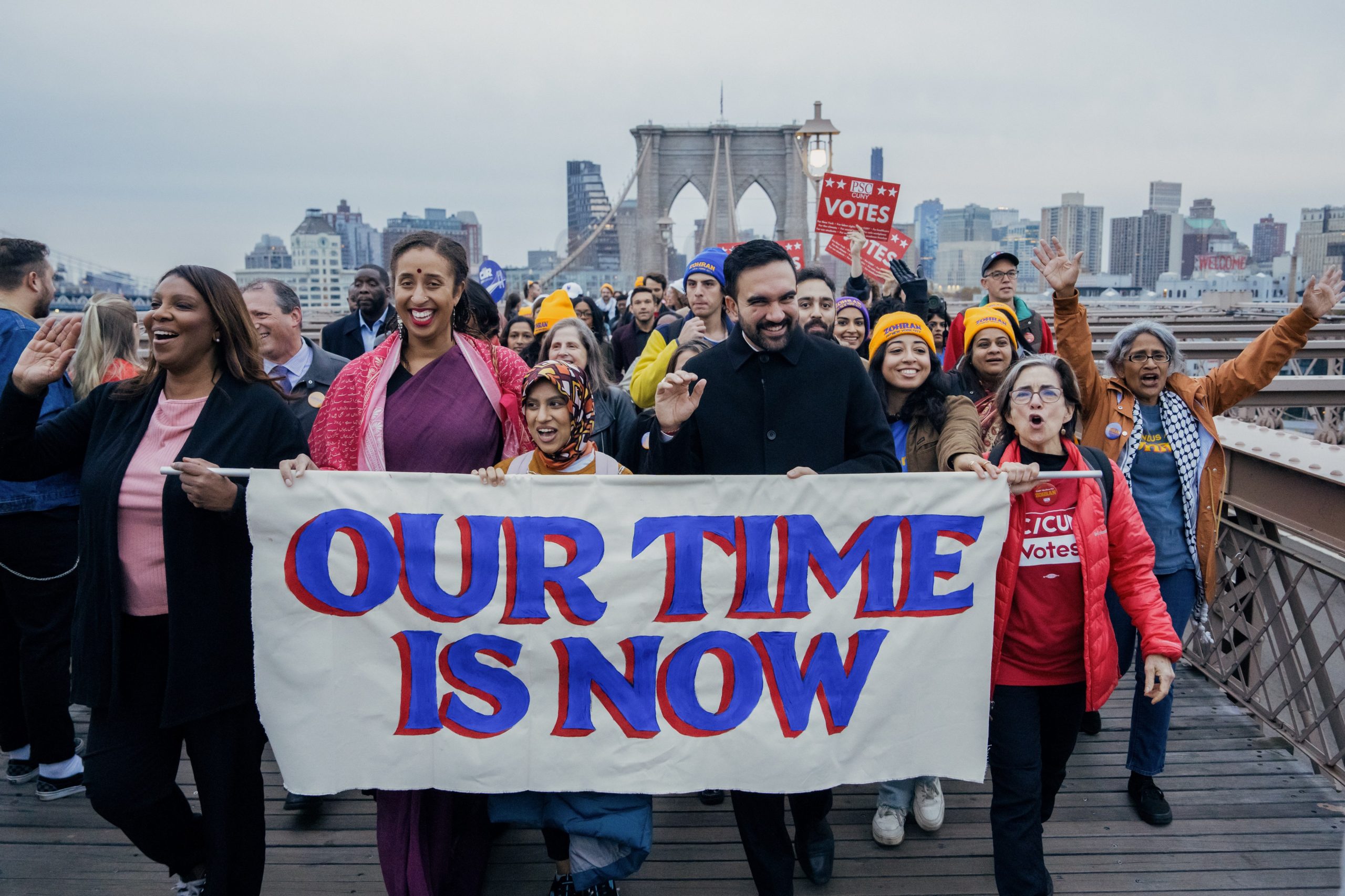
The term “socialism” is experiencing a significant resurgence, shifting from a Cold War relic to a concept embraced by a growing mainstream, particularly among younger generations. Recent surveys reveal a notable uptick in positive sentiment towards socialism, not only among Democrats but also among a considerable portion of independent voters. This evolution is largely propelled by Gen Z, a demographic that has also played a pivotal role in the victories of left-populist candidates in crucial primary elections.
A June poll conducted by the Cato Institute highlighted this generational divide, finding that 53% of Gen Z individuals express more support for socialism than for capitalism (45%). This contrasts sharply with older demographics. An August Gallup poll indicated that over half (57%) of individuals aged 18 to 34 hold a favorable view of socialism, a stark difference compared to only 34% of those over 55. These statistics are not only energizing socialist advocates but are also sounding alarms among Republicans, who are increasingly characterizing Democrats as veering towards “communism” in their electoral strategies.
A Generational Reinterpretation of Economic Ideals
The data suggests that for many young Americans, “socialism” doesn’t necessarily equate to the historical models of state-controlled economies. Instead, it appears to represent a broader aspiration for greater economic fairness, robust social safety nets, and policies that address systemic inequalities. This reinterpretation is likely influenced by the economic realities faced by younger generations, including student loan debt, rising housing costs, and concerns about climate change, all of which can foster a desire for collective solutions and government intervention.
The support for policies often associated with socialist principles – such as universal healthcare, free or affordable higher education, and stronger environmental regulations – appears to be a driving force behind this positive perception. When these specific policy proposals are presented, rather than the abstract label of “socialism,” they often garner widespread approval across the political spectrum. The challenge for political discourse, therefore, lies in bridging the gap between the historical baggage of the term “socialism” and its contemporary, policy-driven meaning for a new generation.
Political Ramifications and Shifting Landscapes
This generational shift in economic ideology has tangible consequences for the political landscape. The success of left-populist candidates, often campaigning on platforms that incorporate socialist-leaning policies, demonstrates the growing electoral viability of these ideas. For established political parties, understanding and responding to this evolving sentiment will be crucial. Ignoring or dismissing these preferences risks alienating a significant and growing bloc of voters.
Conversely, the apprehension expressed by some political factions underscores the enduring ideological divides. The tendency to equate modern calls for social programs with historical communism overlooks the nuances of contemporary debates. As the demographic and ideological makeup of the electorate continues to transform, political rhetoric and policy proposals will need to adapt to reflect the evolving understanding and aspirations of younger voters. The conversation around socialism is no longer confined to niche political circles; it is now a mainstream discussion, significantly shaped by the perspectives of Gen Z.
Based on materials: Vox



