
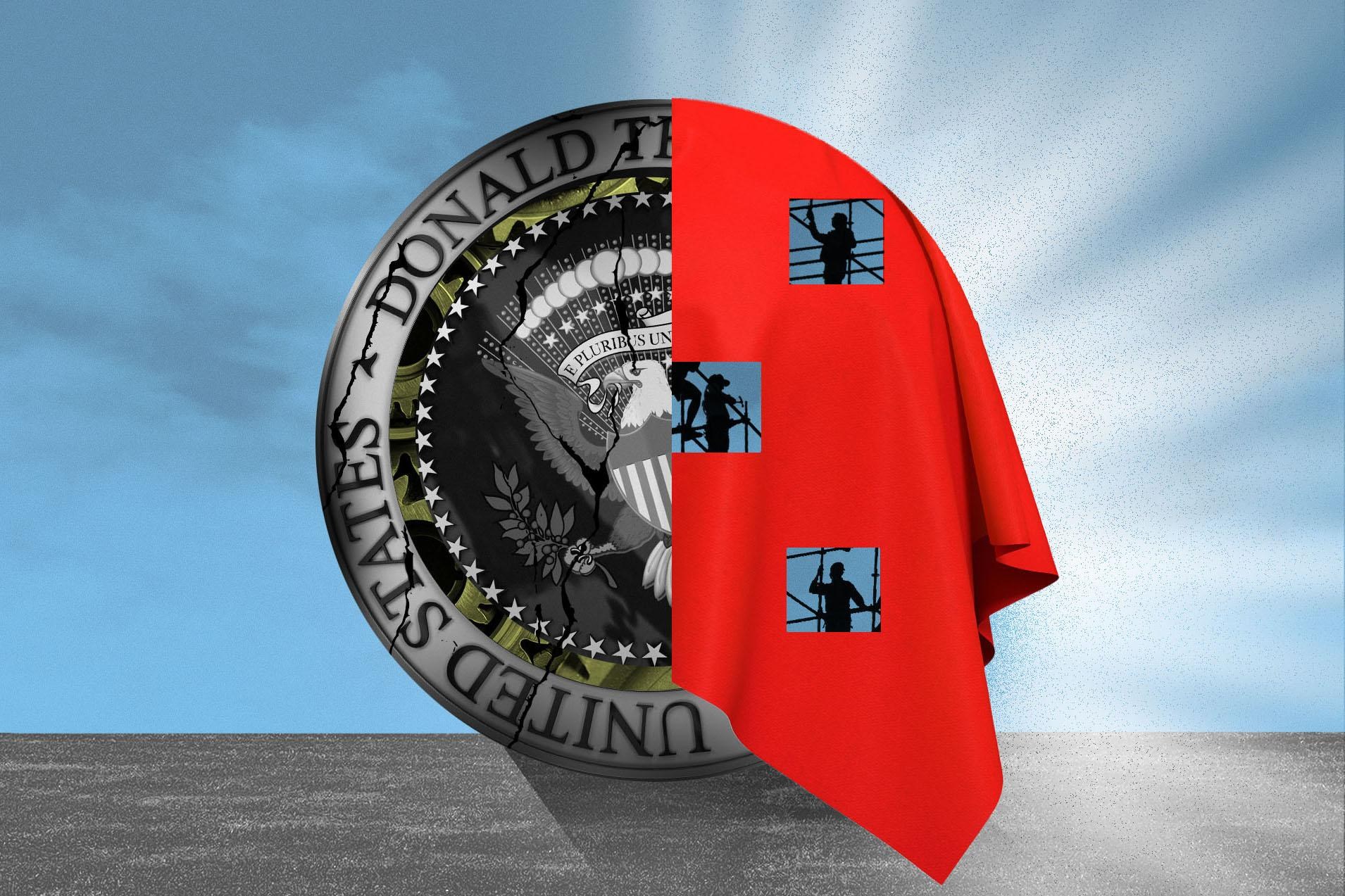
Donald Trump’s potential second term is no longer just a campaign talking point; a meticulously crafted blueprint for governmental transformation, known as Project 2025, is actively being integrated into his policy agenda. This ambitious plan, spearheaded by the conservative Heritage Foundation, extends beyond a mere list of policy proposals. It presents a radical redefinition of executive power, aiming to fundamentally alter the machinery of the U.S. government.
A Sweeping Vision for Executive Power
Project 2025 offers a clear roadmap for how a conservative administration could wield presidential authority with unprecedented force. The document details strategies to consolidate power within executive agencies, bolstering those aligned with conservative ideology, such as immigration enforcement. Conversely, it outlines plans to dismantle or significantly reduce programs deemed antithetical to the conservative agenda, including foreign aid and the existing civil service structure. This approach signals a departure from traditional governance, prioritizing a top-down restructuring designed to align government functions with a specific political vision. The intellectual architect behind this ambitious project, Russell Vought, has been appointed to a key position within the Office of Management and Budget (OMB), signaling a tangible commitment to implementing Project 2025’s core tenets.
From Campaign Rhetoric to Policy Reality
During the 2024 presidential campaign, Project 2025 was a frequent target for Democratic criticism, often characterized as a dystopian vision of a potential Trump presidency. Trump himself, at times, distanced himself from the plan, labeling it an external document unrelated to his direct objectives. However, recent appointments and the strategic placement of key figures involved in Project 2025’s development suggest that the plan has been more than just campaign fodder. The elevation of Vought to lead the OMB is a significant indicator that the ideas incubated within the Heritage Foundation are now at the forefront of policy implementation, moving from theoretical aspiration to practical application. This pivot underscores the seriousness with which the Trump campaign and its allies view the project’s potential to reshape the federal bureaucracy.
Implications for Governance and Beyond
The implementation of Project 2025 carries profound implications for the future of American governance. By seeking to aggressively utilize executive authority, the plan aims to bypass traditional legislative hurdles and implement policy changes directly through administrative action. This could lead to a significant shift in the balance of power between the executive and legislative branches, as well as a reorientation of federal agency priorities and functions. The emphasis on strengthening specific executive departments while weakening others, particularly the civil service, raises questions about governmental efficiency, bureaucratic neutrality, and the long-term impact on public administration. As Project 2025 moves from concept to execution, its unfolding will undoubtedly be a critical story to watch in the coming years.
SOURCE INFORMATION:
TITLE: The radical Democratic plan to change the government for good
DESCRIPTION: Donald Trump started his second term in office with a plan: Project 2025. The document — a detailed policy blueprint put together by the right-wing Heritage Foundation — outlined not just a hardline policy agenda, but a novel theory of how to wield power to get it done. Its chapters showed how a conservative president […].
CONTENT: Donald Trump started his second term in office with a plan: Project 2025. The document — a detailed policy blueprint put together by the right-wing Heritage Foundation — outlined not just a hardline policy agenda, but a novel theory of how to wield power to get it done. Its chapters showed how a conservative president could aggressively use executive authority to strengthen the parts of the government he liked, like immigration enforcement, and smash the parts he didn’t, like foreign aid and the civil service. During his presidential campaign, Democrats attacked Project 2025 as a nightmarish glimpse into what Trump would do if reelected, while Trump dismissed it as an outside plan irrelevant to his presidency. We now know Democrats had it right: Trump embraced Project 2025 for real. After winning, he appointed Russell Vought — the intellectual force behind Project 2025 — to lead his Office of Management and Budget (OMB) and put its ideas into practice. By now, its
Based on materials: Vox