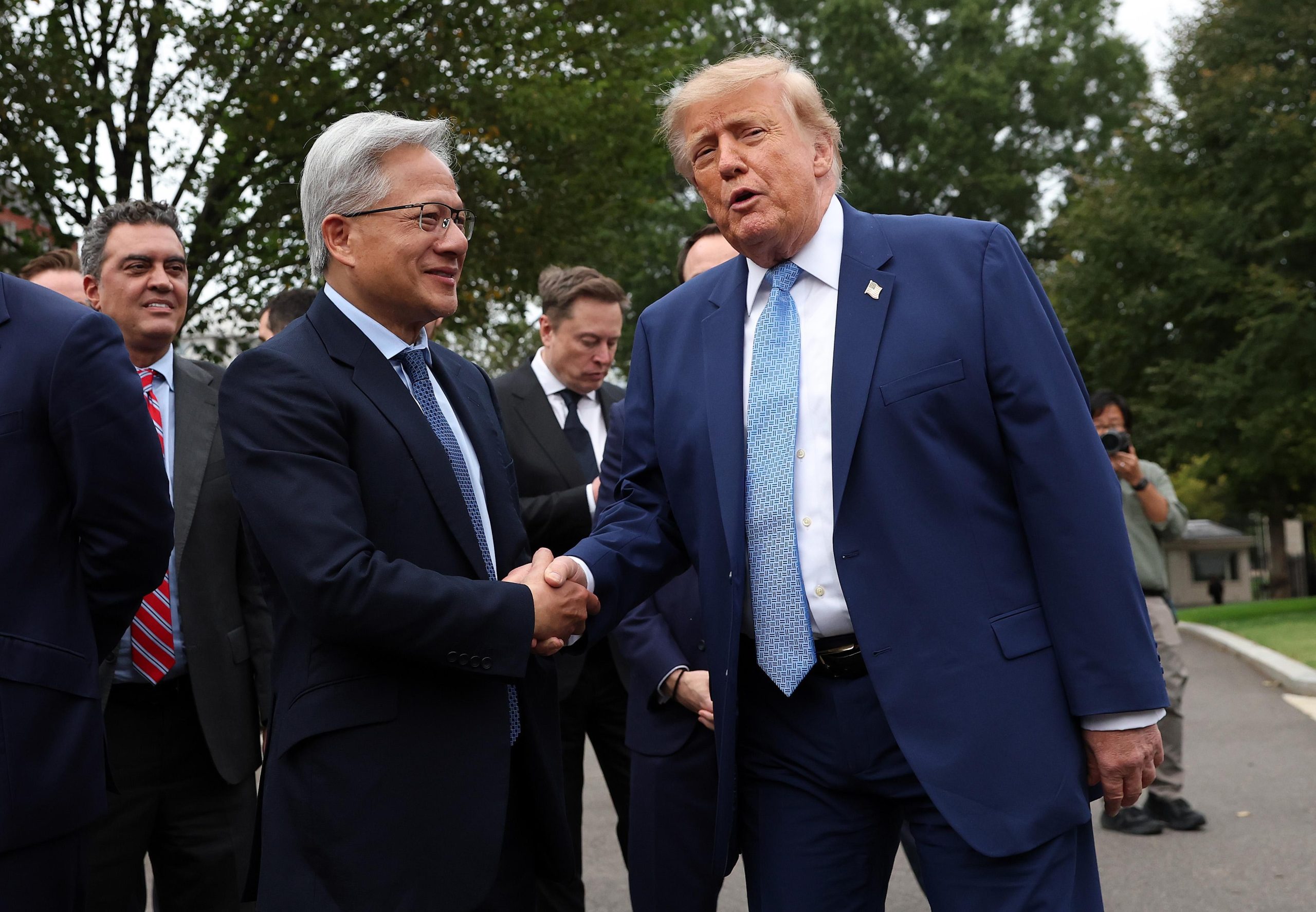
In a move that has sent ripples through the tech world, former President Donald Trump has reportedly played a pivotal role in reinstating Jensen Huang as CEO of Nvidia, a leading artificial intelligence (AI) chip manufacturer. The intervention marks an extraordinary instance of White House involvement in corporate leadership decisions, raising questions about the boundaries between politics and private enterprise.
A Swift Reversal of Fortune for Nvidia’s CEO
Jensen Huang, who had recently resigned from his position as CEO amid reports of alleged affairs, including one with an individual described as a potential Chinese spy, found his leadership position surprisingly reinstated. Sources indicate that Trump personally contacted an Nvidia board meeting over the weekend, offering “assurance” regarding the legal and national security concerns that had led to Huang’s initial departure. This direct engagement by a former president in a corporate boardroom is unprecedented in recent history, highlighting the perceived importance of Nvidia and its leadership to the broader AI landscape.
White House’s Strategic Interest in AI Dominance
The Trump administration, and now reportedly Trump himself, appears to have a keen interest in ensuring the stability and continued leadership of key players in the AI sector. Nvidia, as a primary designer and manufacturer of the advanced chips essential for AI development and deployment, is a critical company in this rapidly evolving field. The administration’s concern for Huang’s leadership suggests a strategic imperative to maintain continuity and expertise within a company vital to national technological advancement and security. The allegations surrounding Huang, while potentially damaging, were evidently deemed less critical than the perceived risk of leadership instability at a company at the forefront of AI innovation. This intervention underscores the growing recognition of AI’s strategic importance on a national and global scale.
Implications for Corporate Governance and Political Influence
This unprecedented level of direct White House interference in corporate affairs raises significant questions about the future of corporate governance and the extent of political influence in the business world. While the stated motivation appears to be safeguarding national interests in the AI sector, the direct involvement of a former president in a CEO’s reinstatement blurs the lines between public policy and private decision-making. It suggests a potential precedent for future political interventions in the leadership of critical industries, particularly those deemed strategically important. Industry observers will be closely watching to see how this event shapes corporate responses to leadership challenges and the potential for political entanglement in the future. The incident highlights the complex interplay between technological advancement, national security, and political power in the modern era.
Conclusion
The dramatic return of Jensen Huang to the helm of Nvidia, reportedly facilitated by direct intervention from former President Donald Trump, is a stark illustration of the growing strategic importance of the AI industry. This event not only signifies a remarkable reversal of personal fortune for Huang but also sets a potentially significant precedent for White House involvement in corporate leadership. As the AI sector continues its exponential growth, its critical role in national security and economic competitiveness is becoming increasingly evident, leading to unprecedented levels of political attention and, as seen here, direct engagement. The long-term implications for corporate governance and the relationship between politics and business remain to be seen.
Based on materials: Vox