
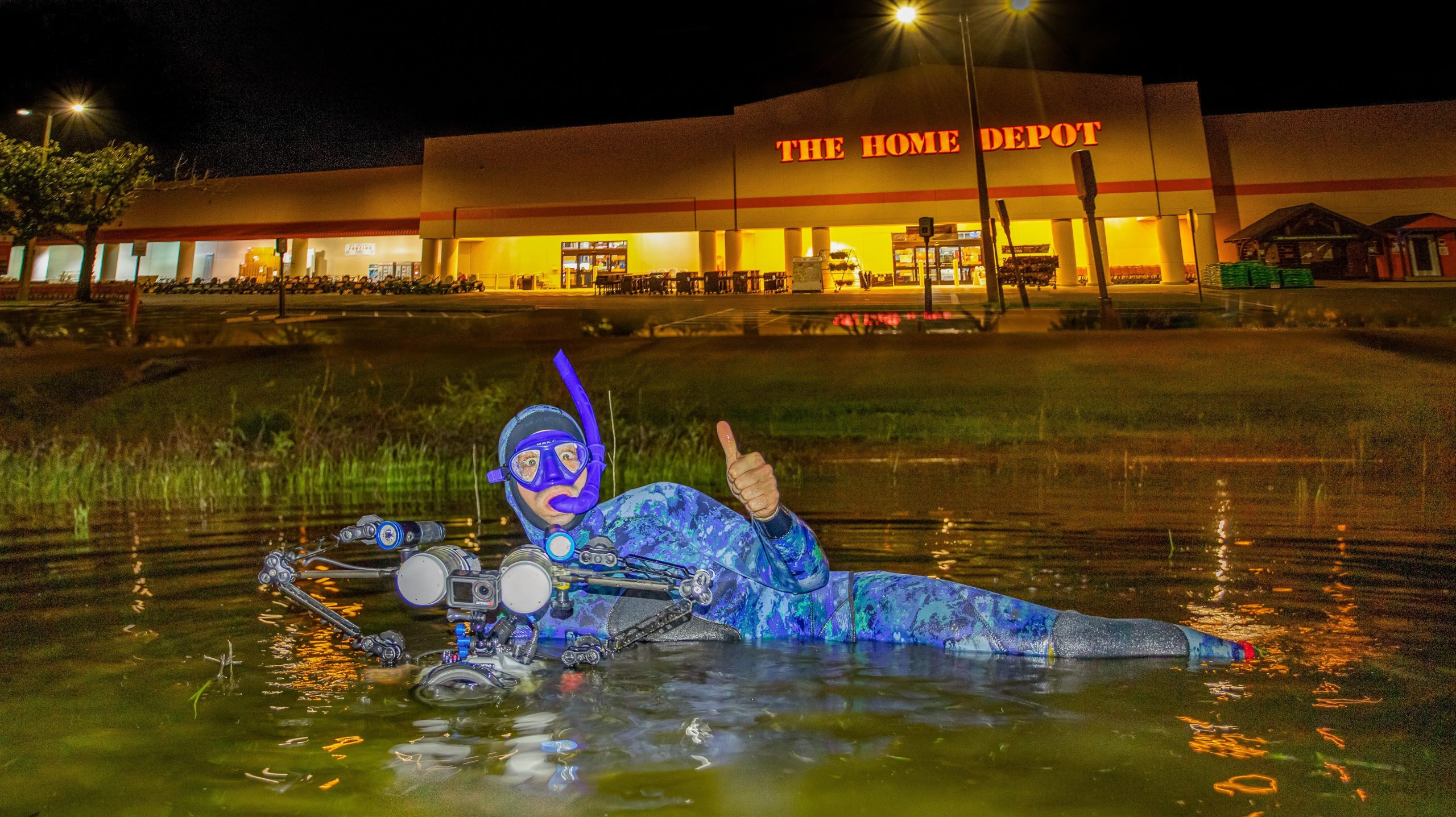
Urban Ponds: Surprising Life Beneath Home Depot’s Surface
What might appear to be a forgotten, stagnant puddle of urban runoff can, in fact, harbor a surprisingly vibrant ecosystem. This unconventional truth was recently highlighted by Joseph Ricketts, a biologist and popular YouTuber from Florida, who donned his snorkel gear and plunged into a retention pond adjacent to his local Home Depot. His resulting video, “Night Snorkel In a Home Depot Retention Pond,” has captivated millions, proving that life can thrive in the most unexpected places.
The video, which has garnered over two million views, challenges common perceptions of these often-overlooked water bodies. Ricketts, whose professional expertise lies in crocodile and alligator research, discovered a hidden world teeming with activity beneath the murky surface. Far from being a sterile environment, the pond was alive with a diverse array of aquatic creatures.
An Unexpected Aquatic Metropolis
Ricketts’ dive revealed a dynamic environment far removed from the discarded beer cans and general detritus that might be visible from the shore. He documented a water snake, its recent meal clearly visible in its stomach, navigating the depths. Schools of tadpoles, some already in the process of metamorphosis into frogs, darted through the water, indicating a healthy reproductive cycle. The silty bottom was home to mysterious shrimp, scuttling and foraging in the sediment. This discovery underscores a critical point: even in highly urbanized landscapes, natural processes of life and survival persist, often unseen by the casual observer.
The Importance of Urban Waterways
The significance of Ricketts’ exploration extends beyond mere curiosity. Retention ponds, often constructed to manage stormwater runoff in developed areas, are frequently dismissed as functional, uninteresting features of the landscape. However, as Ricketts’ findings suggest, they can serve as vital microhabitats for a variety of species. These urban waterways can act as crucial stepping stones for wildlife, providing essential resources and connecting fragmented natural areas. Understanding the ecological value of these seemingly mundane spaces is paramount for effective urban planning and conservation efforts. By bringing attention to the biodiversity within these ponds, Ricketts’ work encourages a re-evaluation of our relationship with the natural world, even in the heart of our built environments.
In conclusion, Joseph Ricketts’ nocturnal snorkeling adventure in a Home Depot retention pond has offered a powerful reminder that nature’s resilience is remarkable. It serves as a compelling case study for the often-underappreciated ecological importance of urban water features. As our cities continue to grow, recognizing and protecting these pocket ecosystems could play a significant role in supporting biodiversity and fostering a more integrated relationship between human development and the natural world.
Based on materials: Vox