
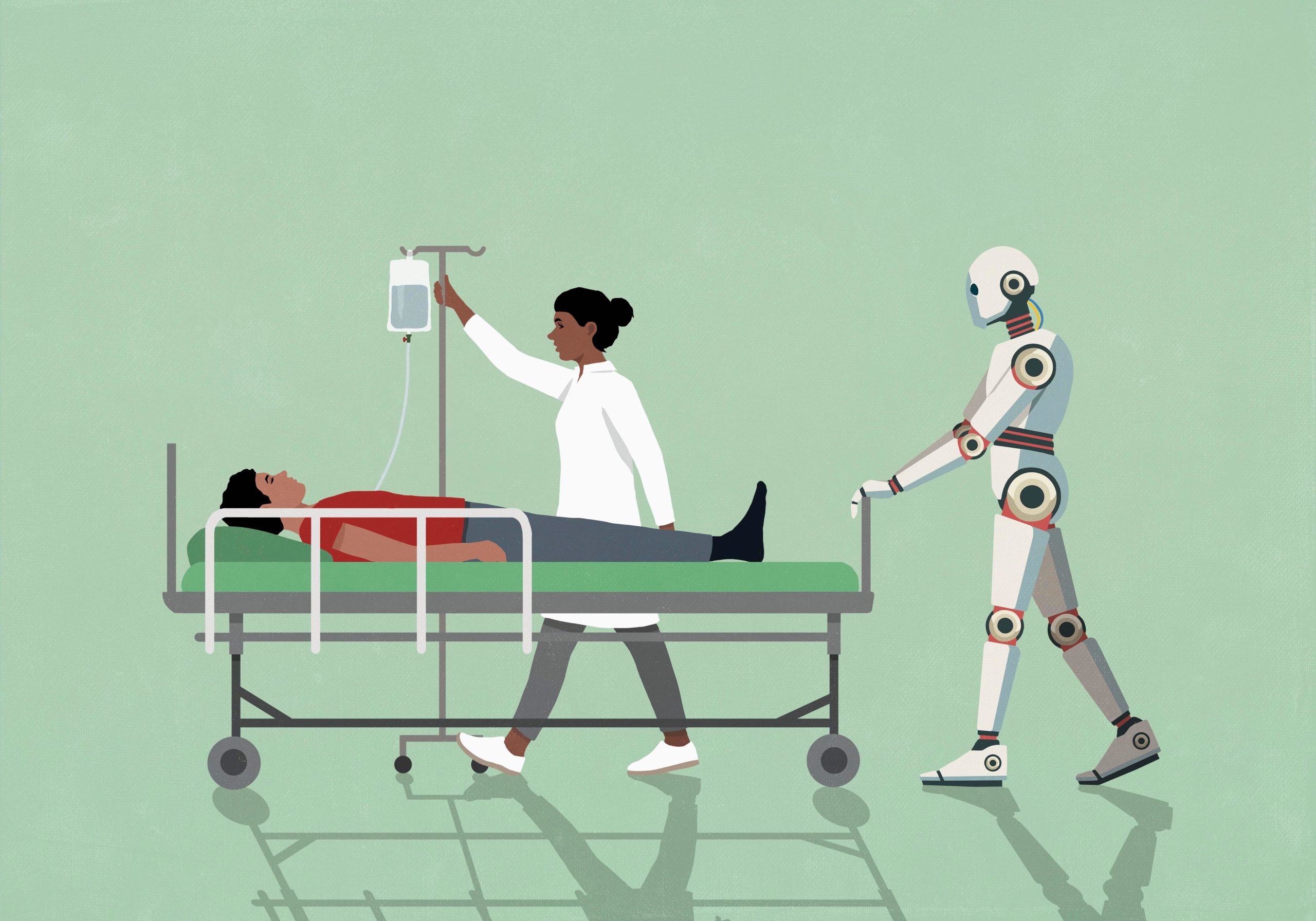
The integration of Artificial Intelligence (AI) into healthcare is no longer a futuristic concept; it’s a rapidly evolving reality. While the potential for AI to revolutionize patient care is immense, public apprehension remains a significant hurdle. A recent KFF poll from October 2025 revealed that a mere 8% of Americans express a “great deal” of trust in AI managing their appointments or analyzing sensitive health records. This sentiment is further underscored by the fact that only 32% would confidently allow an AI-powered online health tool to access their medical records for personalized information.
Despite this public unease, a starkly different picture emerges from within the medical community. Clinicians and healthcare administrators are increasingly embracing AI as a powerful ally, recognizing its capacity to streamline operations and enhance treatment outcomes. Evidence of this shift is evident in a 2026 survey which indicated that over 80% of US physicians are now utilizing AI in their professional practice, a remarkable doubling since 2023. This widespread adoption stems from AI’s burgeoning ability to assist with tasks like maintaining more accurate patient notes from consultations, thereby freeing up valuable physician time.
Navigating the Trust Deficit
The dichotomy between public wariness and professional enthusiasm highlights a critical challenge for AI in healthcare: building trust. For patients, the prospect of algorithms making decisions about their health can feel impersonal and even alarming. Concerns about data privacy, algorithmic bias, and the potential for errors are valid and require open discussion. Experts emphasize that patients have every right to inquire about how AI is being deployed in their care. Understanding the specific applications – whether it’s for diagnostic assistance, administrative efficiency, or personalized treatment plans – can go a long way in alleviating fears. Transparency from healthcare providers and developers will be paramount in fostering this trust, ensuring that AI serves as a tool to augment, not replace, the human element of care.
AI’s Transformative Potential
Beyond patient anxieties, the practical benefits of AI in medicine are undeniable. For physicians, AI’s capacity to process vast amounts of medical literature and patient data can lead to more informed diagnostic decisions and treatment strategies. AI-powered tools can identify subtle patterns in medical images that might be missed by the human eye, leading to earlier detection of diseases. Furthermore, AI can significantly reduce the administrative burden on healthcare professionals, automating tasks such as scheduling, billing, and record-keeping. This not only improves efficiency but also allows doctors and nurses to dedicate more time to direct patient interaction, enhancing the quality of care. The ongoing development of AI promises even more sophisticated applications, from drug discovery and development to predictive analytics for disease outbreaks.
The Road Ahead: A Balanced Approach
The future of AI in healthcare hinges on a balanced approach that addresses public concerns while harnessing its transformative potential. Continuous dialogue, robust regulatory frameworks, and a commitment to ethical AI development are essential. As AI becomes more sophisticated and its benefits become more evident, fostering a greater understanding and acceptance among the public will be crucial. The journey towards widespread trust may be gradual, but the ongoing advancements in AI suggest a future where it plays an increasingly vital role in delivering more effective, efficient, and personalized healthcare for all.
Based on materials: Vox



