
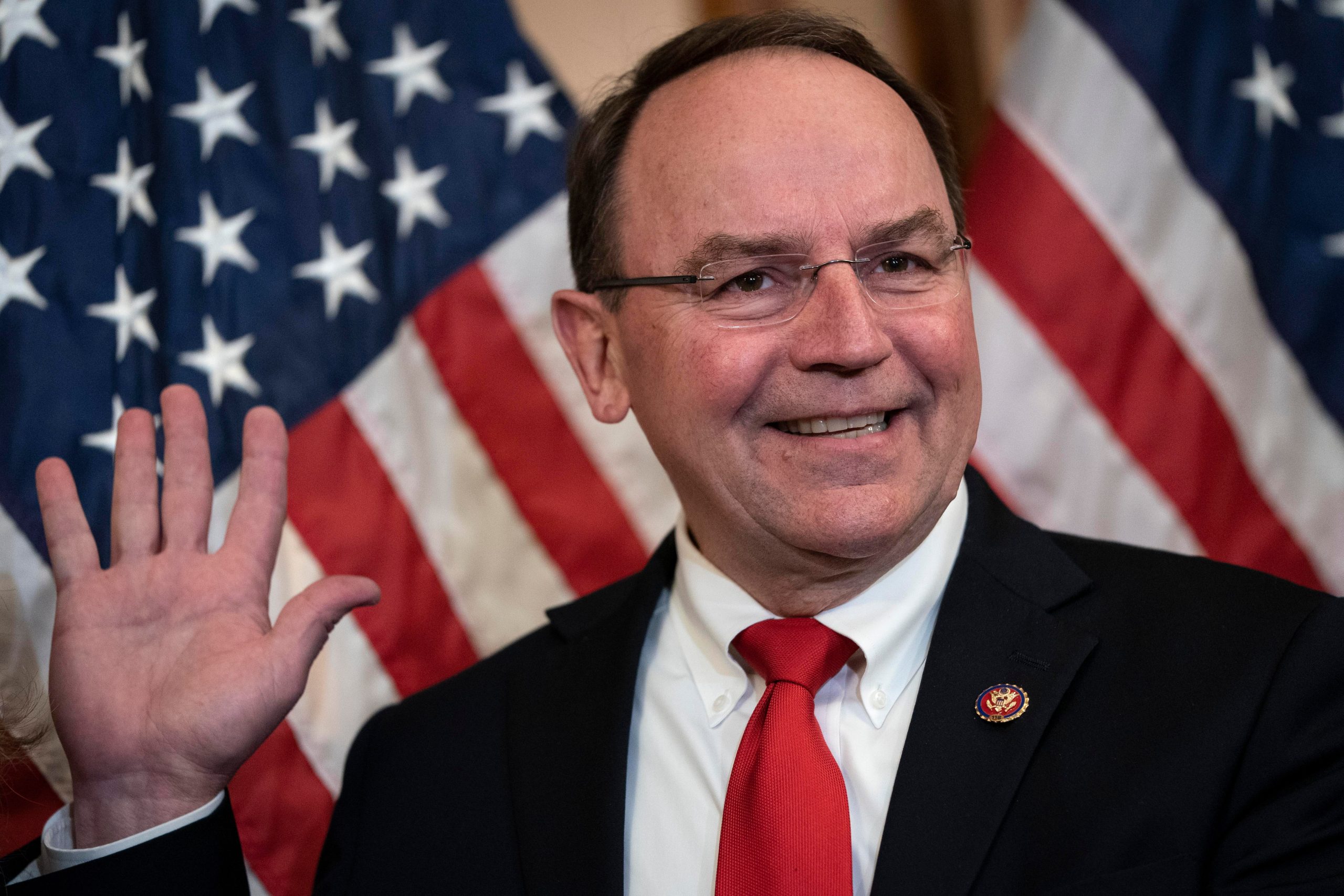
The specter of election denialism is once again casting a shadow over American politics, with a prominent figure actively promoting unsubstantiated claims about the 2020 presidential election emerging as a leading contender for governor in the crucial swing state of Wisconsin. Tom Tiffany, the newly minted Republican nominee, is not merely a bystander in the ongoing narrative of false election fraud allegations; he has been a vocal and active participant in propagating these claims, raising significant concerns about the future of democratic processes in the state and potentially beyond.
Tiffany’s record on this issue is well-documented. While serving as a member of Congress in December 2020, he lent his support to a lawsuit initiated by Texas, which aimed to nullify Joe Biden’s victory in the presidential election. This was followed by his vote on January 6, 2021, to reject the certification of election results from Pennsylvania and Texas, a move made in the immediate aftermath of the Capitol riot where colleagues feared for their lives. Furthermore, Tiffany has publicly stated his willingness to have reversed Wisconsin’s election outcome, and earlier this year, he backed an FBI inquiry into the state’s electoral processes.
A Troubling Trend in Battleground States
The rise of candidates who question the integrity of past elections presents a significant challenge for the Democratic Party, particularly in closely contested states like Wisconsin. While national political winds may appear to favor Democrats in 2026, the electoral landscape in Wisconsin is notoriously tight, meaning Tiffany could potentially defy expectations and secure a gubernatorial victory. This scenario underscores a broader trend: the increasing prominence of individuals who do not fully embrace the legitimacy of American democratic outcomes within the Republican Party’s ranks. Their influence within state-level politics, which often dictates election administration and policy, could have far-reaching implications for voter confidence and the very foundation of electoral fairness.
Implications for Democratic Norms
Tiffany’s ascent to the gubernatorial nomination in Wisconsin is more than just a local political story; it is a potent symbol of a national movement that has gained considerable traction. The willingness of candidates to actively promote baseless election fraud theories, even after numerous failed legal challenges and audits, speaks to a deep-seated skepticism that has been cultivated among a segment of the electorate. The potential for such figures to gain positions of power, especially in states that play a pivotal role in presidential elections, raises serious questions about the future of democratic norms and the peaceful transfer of power. As the general election approaches, voters in Wisconsin will face a critical decision, one that could have lasting consequences for the integrity of their state’s democratic institutions and the broader national political discourse.
CONCLUSION:
The nomination of Tom Tiffany in Wisconsin serves as a stark reminder that the debate over election integrity is far from over. His active involvement in promoting false claims about the 2020 election, coupled with his potential to win a statewide office, highlights the ongoing challenge of safeguarding democratic processes. As the nation looks toward future elections, the influence of election deniers in key battleground states like Wisconsin will undoubtedly remain a central and concerning issue.
Based on materials: Vox



