
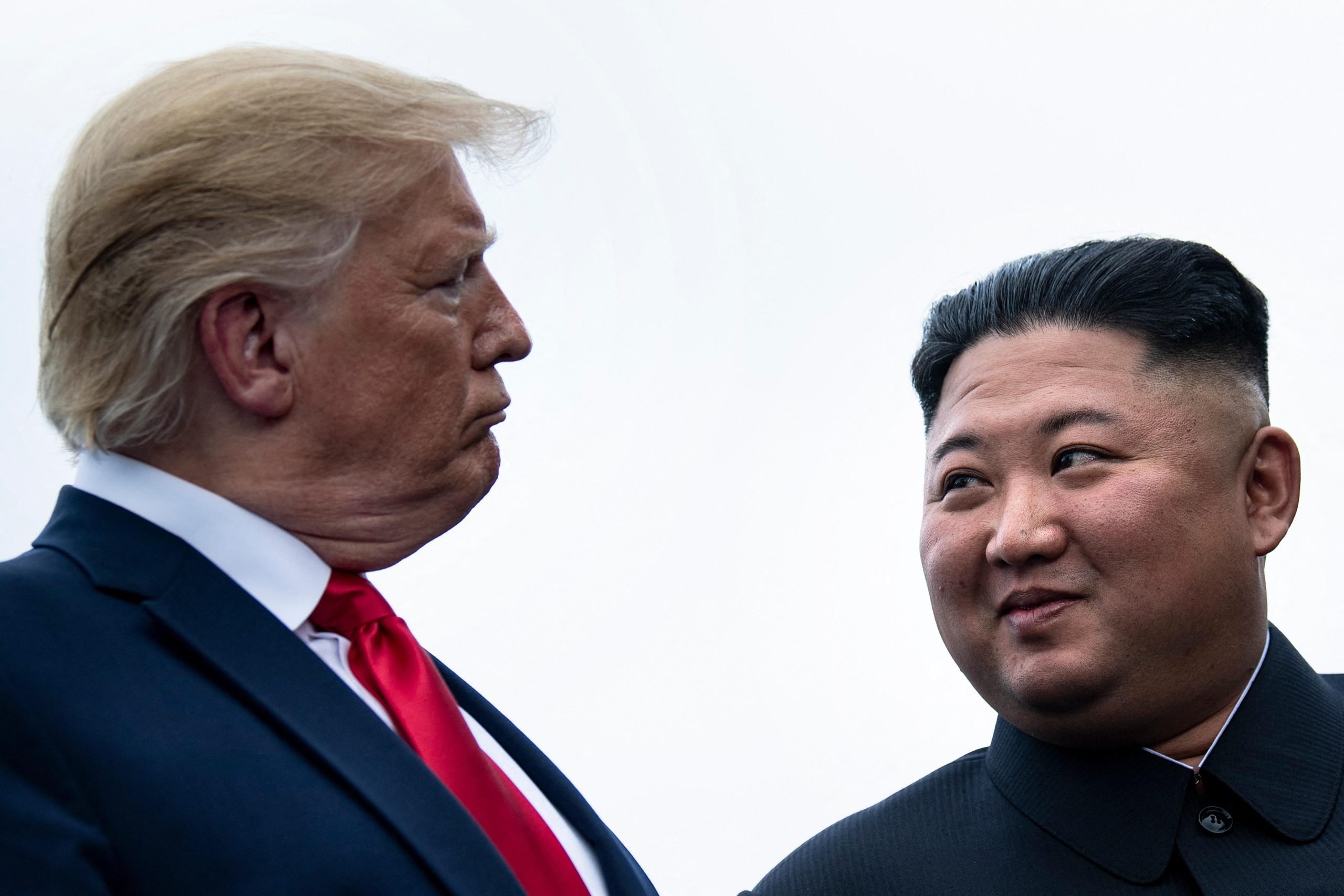
The enigmatic relationship between former President Donald Trump and North Korean leader Kim Jong Un, once famously described by Trump as a “love story,” is reportedly being revisited. Despite unprecedented engagement, including historic summits and a flurry of personal correspondence, the core objective of denuclearizing the Hermit Kingdom remained largely elusive during Trump’s presidency. Now, with Trump reportedly exploring the possibility of a new meeting with Kim, questions arise about whether such a rekindled connection could yield different results or simply retrace familiar, unproductive ground.
A History of High-Stakes Diplomacy
During Trump’s first term, the world watched as he and Kim Jong Un transitioned from being adversaries to something akin to diplomatic partners. Their initial exchanges were marked by fiery rhetoric and mutual threats, but this quickly evolved into a series of highly publicized summits, beginning in Singapore in 2018. Trump often lauded his personal rapport with Kim, citing their “chemistry” and the unique connection they shared as the key to unlocking progress. This personal diplomacy, a stark departure from traditional State Department-led negotiations, led to iconic moments, such as their meeting at the demilitarized zone in June 2019. However, beneath the spectacle, substantive breakthroughs on denuclearization proved difficult to achieve. Sanctions remained largely in place, and North Korea’s weapons programs continued to advance.
The Allure of the Unconventional
Trump’s reported desire to meet with Kim again suggests a continued belief in the efficacy of his unconventional approach. His recent directive to substantially reduce joint military exercises with South Korea, framed as a gesture to avoid sending a hostile signal to North Korea, further underscores this inclination. This move, while potentially aimed at de-escalating tensions and creating an opening for dialogue, has drawn scrutiny from allies and defense experts who view such reductions as potentially weakening deterrence. The former president’s strategy has consistently prioritized direct leader-to-leader engagement, often bypassing established diplomatic channels and relying on personal rapport to overcome entrenched geopolitical obstacles.
Navigating a Complex Landscape
The geopolitical landscape surrounding North Korea has not stood still since Trump left office. The current administration has pursued a policy of “calibrated, practical approach” to North Korea, emphasizing diplomacy while maintaining a commitment to sanctions. A resurgence of Trump-led talks, independent of the current administration’s strategy, could create a complex and potentially disruptive foreign policy dynamic. Furthermore, North Korea’s own calculus has likely evolved, with the regime having experienced the Trump era and now observing the Biden administration’s approach. Whether Kim Jong Un sees renewed personal diplomacy with Trump as a strategic advantage or a familiar tactic with limited long-term benefits remains a critical question. Ultimately, while the personal connection between Trump and Kim was a defining feature of their previous interactions, the complex realities of denuclearization and regional security suggest that rekindling that “spark” may not be enough to forge a lasting peace.
Based on materials: Vox



