
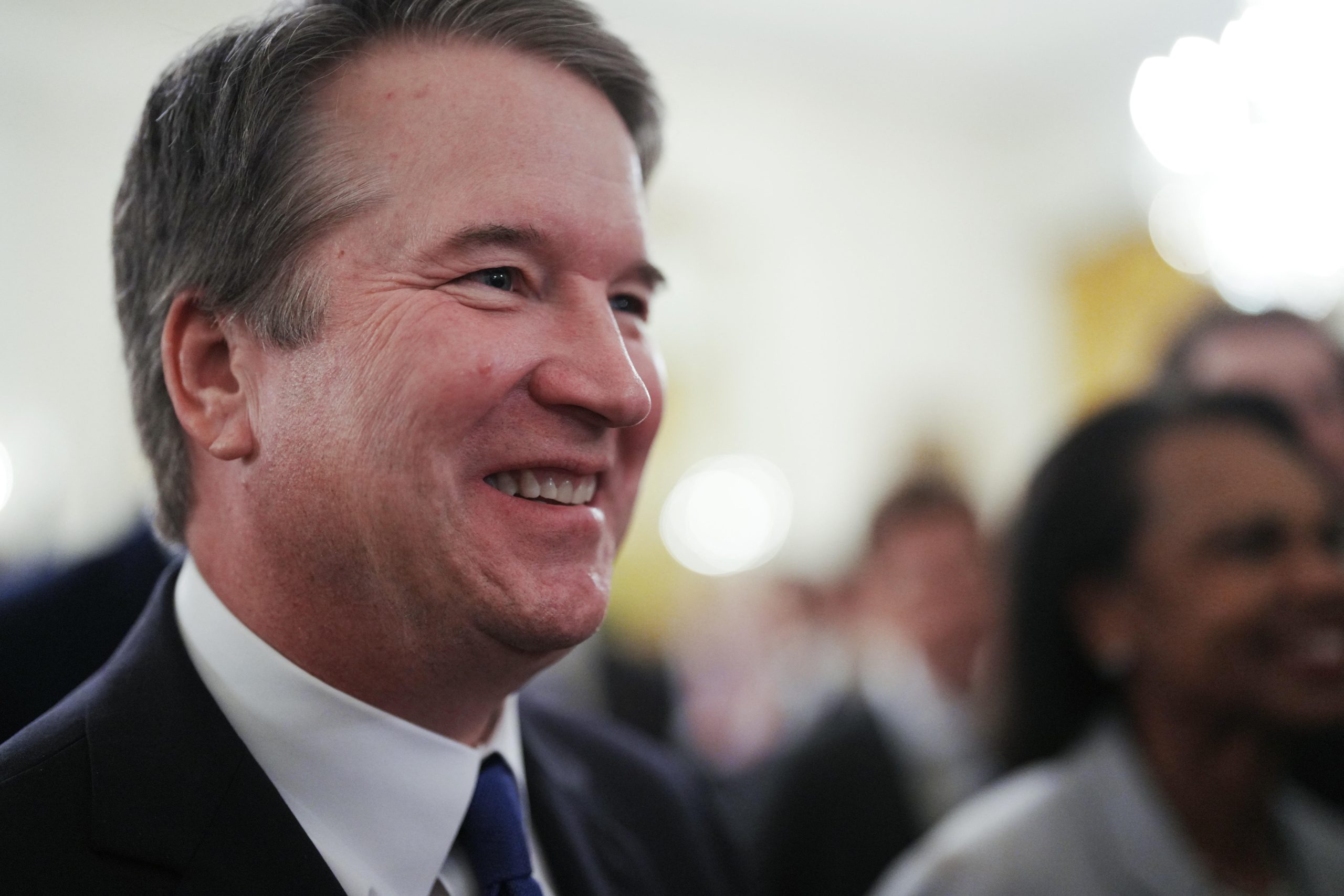
Kavanaugh’s Unexpected Allyship: Racial Justice Ruling
In a surprising turn of events, Supreme Court Justice Brett Kavanaugh, often perceived as a staunch conservative, authored a majority opinion in
Pitchford v. Cain
that bolsters efforts to combat racial bias in jury selection. The ruling, handed down Thursday, effectively implements a strategy Kavanaugh himself proposed as a law student back in 1989, showcasing a commitment to fair jury practices that transcends typical partisan lines. This development raises questions about the complexities of judicial ideology and the potential for unexpected alliances in the pursuit of justice.
A Decades-Old Proposal Comes to Fruition
Kavanaugh’s opinion in
Pitchford v. Cain
centers on a clear violation of
Batson v. Kentucky
(1986), a landmark Supreme Court case that prohibits prosecutors from striking potential jurors solely based on their race. While the
Pitchford
case itself may not introduce entirely new legal precedents, the significance lies in Kavanaugh’s application of his decades-old proposal to address the insidious issue of racial discrimination in jury selection. As a young legal mind, Kavanaugh recognized the inherent dangers of biased jury selection processes and advocated for proactive measures to mitigate those risks. His recent ruling puts those principles into action.
Beyond Partisan Expectations
The unexpected nature of this ruling stems from Kavanaugh’s established conservative credentials. From his time in the White House to his consistent alignment with Republican-appointed justices on the Supreme Court, Kavanaugh’s voting record generally reflects a conservative judicial philosophy. However, the
Pitchford v. Cain
decision demonstrates that even within a conservative framework, there is room for interpretations and applications of the law that promote fairness and address systemic inequalities. This case serves as a reminder that justices are not monolithic entities, and their commitment to certain principles can sometimes transcend party lines.
A Step Forward, But Challenges Remain
While Kavanaugh’s opinion in
Pitchford v. Cain
represents a positive step toward ensuring fair jury selection practices, it is crucial to acknowledge that the fight against racial bias in the legal system is far from over. The
Batson
ruling, while impactful, has faced challenges in its implementation, and racial disparities in jury composition persist. Continued vigilance and proactive measures are necessary to address the subtle and overt forms of discrimination that can taint the jury selection process. However, the
Pitchford
ruling, spearheaded by an unlikely champion, serves as a powerful reminder that progress is possible and that unexpected alliances can emerge in the pursuit of a more just and equitable legal system.
SOURCE INFORMATION:
TITLE: Brett Kavanaugh just won a surprising victory for racial justice
DESCRIPTION: Justice Brett Kavanaugh is a Republican. He served in a Republican White House, typically votes with the Court’s other Republicans, and even sometimes sides with President Donald Trump in major cases that divide the Republican Party. He’s not the sort of person you’d expect to carry a torch for a liberal cause for nearly four […]
CONTENT: Justice Brett Kavanaugh wrote the majority opinion in Pitchford v. Cain. | Aaron Schwartz/AFP via Getty Images Justice Brett Kavanaugh is a Republican. He served in a Republican White House, typically votes with the Court’s other Republicans, and even sometimes sides with President Donald Trump in major cases that divide the Republican Party. He’s not the sort of person you’d expect to carry a torch for a liberal cause for nearly four full decades. But, well, he did. In Kavanaugh’s majority opinion in Pitchford v. Cain, which was handed down on Thursday, the justice more or less implemented a proposal for how to prevent racism from infecting jury selection that he first proposed in a 1989 piece that he published when he was still a law student. To be clear, Kavanaugh’s Pitchford opinion doesn’t really break much new ground. It involves a straightforward violation of Batson v. Kentucky (1986), the Supreme Court’s most important precedent governing race in jury selection, a
SOURCE: Vox
Based on materials: Vox



