
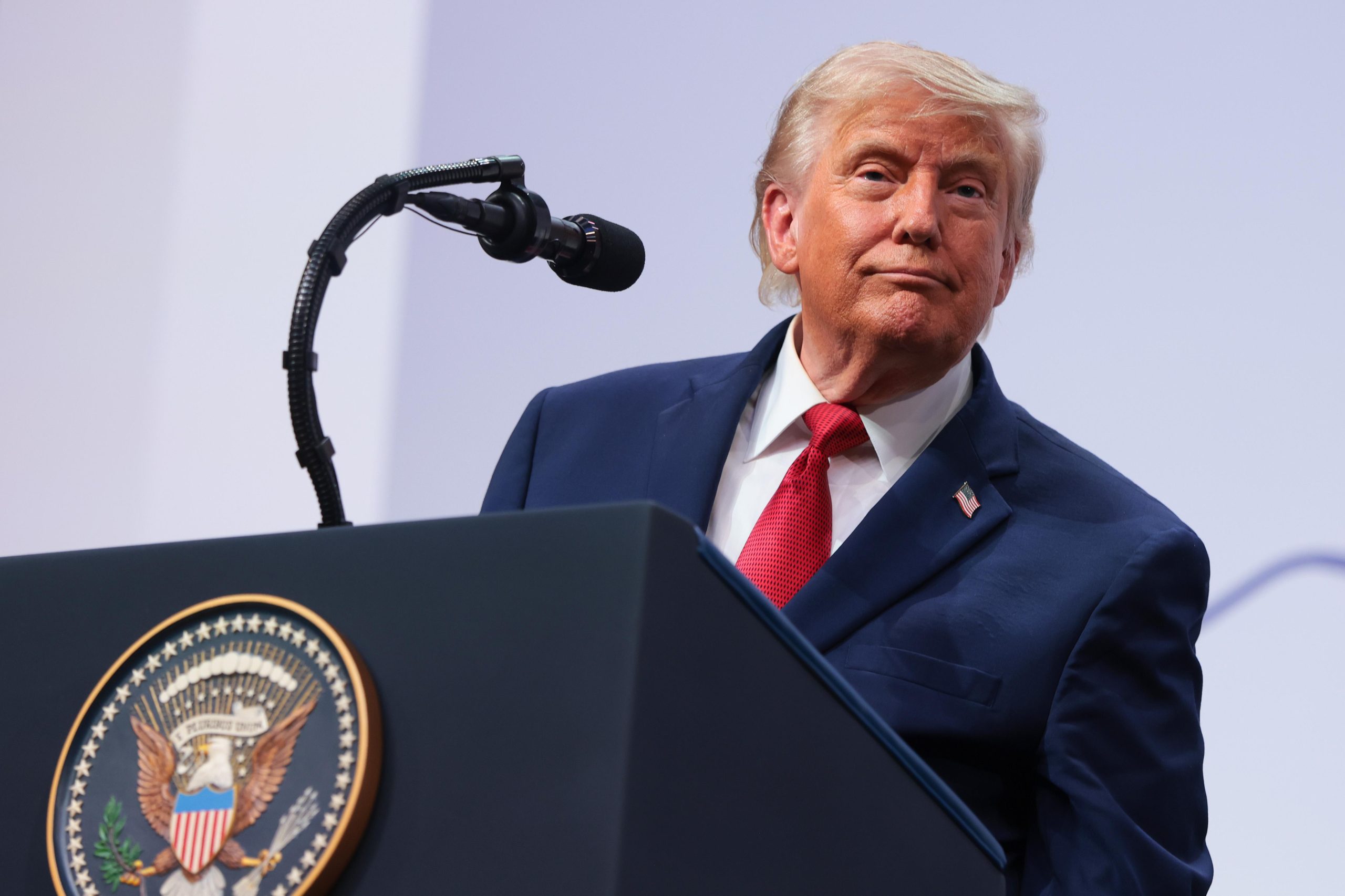
President Donald Trump appears to be actively undermining his own selection for the nation’s top intelligence post, casting doubt on the confirmation of Jay Clayton, the U.S. Attorney for the Southern District of New York. This development has raised eyebrows among lawmakers and intelligence community observers, who question the president’s strategy in pushing for a candidate he himself put forward.
A Nominee in Doubt
The nomination of Jay Clayton as Director of National Intelligence (DNI) was initially seen as a potentially stabilizing move. Following concerns about the unqualified nature of a previous interim appointee, Bill Pulte, Clayton’s selection offered a sense of procedural progress. Senators were reportedly preparing to expedite his confirmation process, aiming to secure a permanent leadership for the intelligence community before an impending deadline. However, President Trump’s recent actions have abruptly stalled this momentum.
On Wednesday, the White House effectively canceled the scheduled confirmation hearings for Clayton. This move, described by sources as a “wrench in the works,” has left many speculating about the president’s motivations. While the exact reasons remain unclear, the decision to halt the confirmation process for his own nominee suggests a complex political calculus at play, potentially driven by internal White House dynamics or a desire to exert further control over the appointment.
Strategic Sabotage or Shifting Sands?
The president’s apparent intervention raises significant questions about his approach to personnel appointments, particularly in critical national security roles. Is this a deliberate tactic to either withdraw the nomination or extract further concessions, or is it a sign of a disorganized administration struggling to maintain a consistent strategy? The DNI role is pivotal, overseeing the coordination and integration of all U.S. intelligence agencies. A protracted or contentious confirmation process for such a key position can weaken the agency’s effectiveness and create uncertainty within the intelligence community.
Analysts suggest several possible interpretations. One theory is that Trump may be dissatisfied with Clayton’s perceived lack of eagerness or perceived independence. Another possibility is that the president is seeking to pressure the Senate for other priorities, using the DNI nomination as leverage. Alternatively, the abrupt cancellation could signal a sudden shift in strategy, perhaps due to new information or a change in the political landscape that has made Clayton a less desirable candidate in the president’s eyes. Regardless of the immediate cause, the outcome is a weakened position for the nominee and a continued period of flux for the Office of the Director of National Intelligence.
Implications for Intelligence Leadership
The unfolding situation surrounding Jay Clayton’s nomination underscores the challenges inherent in high-stakes political appointments. The Director of National Intelligence plays a crucial role in safeguarding national security by ensuring that intelligence is collected, analyzed, and disseminated effectively. A leader who is perceived as politically compromised or whose confirmation is mired in controversy can face an uphill battle in commanding the respect and cooperation of the diverse intelligence agencies they are meant to lead. As the situation develops, the focus will be on whether President Trump can effectively navigate these political currents to secure a confirmed DNI, or if his actions will continue to create obstacles for his own administration’s objectives.
Based on materials: Vox



