
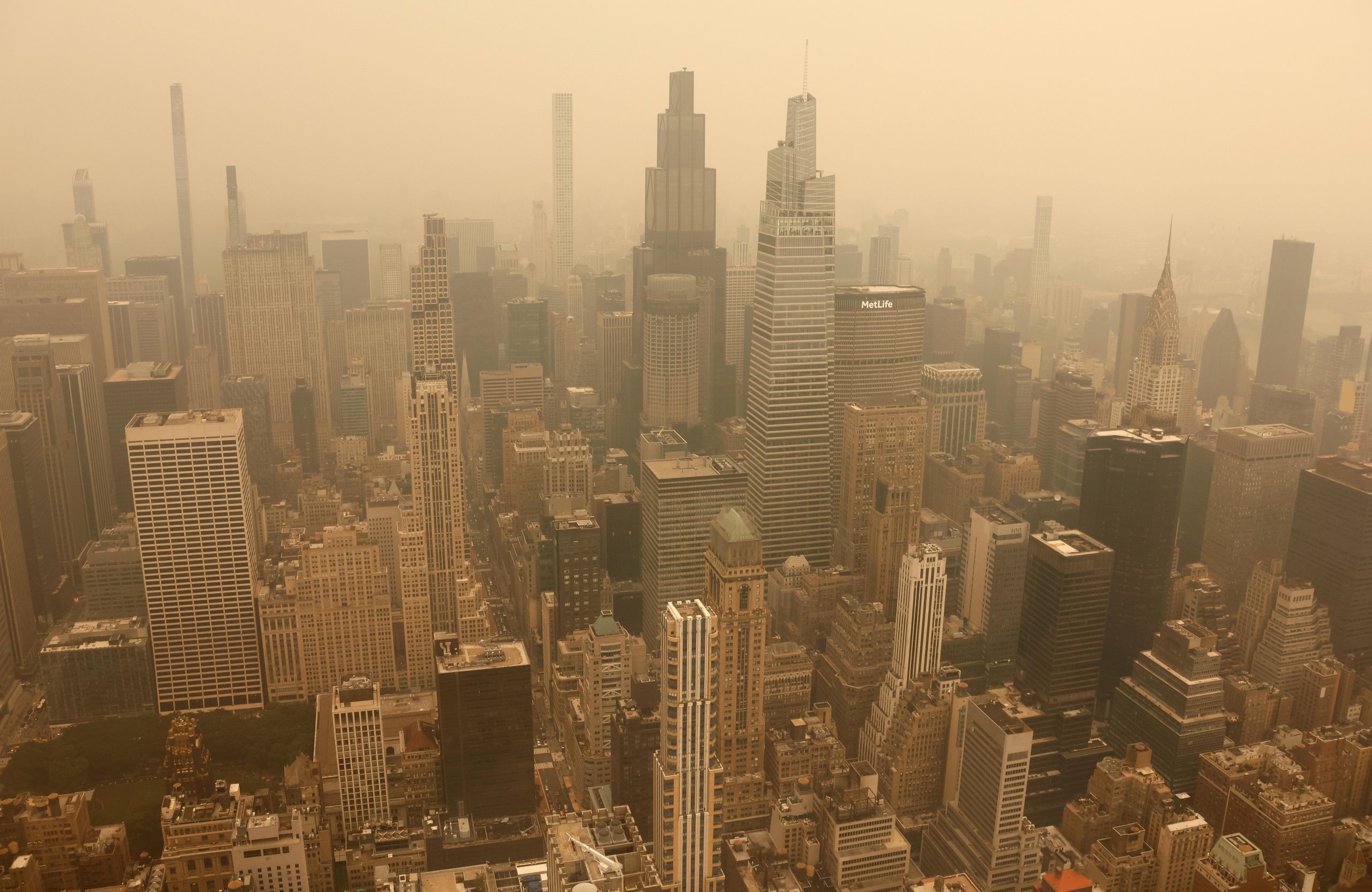
A thick blanket of smoke from Canada’s unprecedented wildfire season has descended upon the northeastern United States and Upper Midwest, turning skies a hazy amber and creating hazardous air quality for millions. The phenomenon, exacerbated by a persistent “heat dome,” has trapped hot, smoky air close to the ground, leading to what many are describing as an apocalyptic visual and a palpable taste of campfire in the air.
The current situation is a stark illustration of the far-reaching consequences of climate change and environmental degradation. As hundreds of wildfires rage across Canada, fueled by record-breaking heat and dry conditions, their atmospheric impact knows no borders. Residents from Buffalo to the Upper Midwest are experiencing an air quality advisory, with fine particulate matter reaching dangerous levels. This is not merely an inconvenience; it poses significant health risks, particularly for vulnerable populations such as children, the elderly, and individuals with respiratory or cardiovascular conditions.
A Lingering Threat Under a Heat Dome
The confluence of intense wildfires and a “heat dome” is creating a perfect storm for poor air quality. This meteorological event acts like a lid, preventing cooler, cleaner air from circulating and instead concentrating the hot, smoke-laden air near the surface. Experts anticipate these conditions could persist through Saturday, extending the period of elevated pollution and exposing an estimated 115 million people to unhealthy air. The visual impact has been dramatic, with landmarks obscured by the dense haze and a surreal, apocalyptic glow to the sky. This visual disruption serves as a potent, immediate reminder of the environmental challenges facing North America.
Health and Environmental Implications
The immediate concern is public health. Exposure to fine particulate matter, the primary component of wildfire smoke, can lead to a range of health issues, including coughing, wheezing, shortness of breath, and aggravation of asthma and other chronic lung diseases. In the longer term, repeated exposure can contribute to more serious health problems. Beyond the human impact, the environmental implications are equally significant. The smoke carries pollutants that can affect ecosystems, damage crops, and contribute to further environmental stress. This event underscores the interconnectedness of environmental systems and the need for coordinated action to address the root causes of climate change and wildfire management.
Looking Ahead: A Call for Action
The current air quality crisis serves as a critical wake-up call. While immediate measures like staying indoors and using air purifiers can mitigate immediate risks, the long-term solution lies in addressing the underlying factors contributing to the severity and frequency of wildfires. This includes robust climate change mitigation strategies, improved forest management practices, and international cooperation on environmental issues. As the smoke lingers, it leaves behind not just a hazy sky, but also a profound question about our collective responsibility to protect the air we breathe and the planet we inhabit. The current situation demands a renewed focus on sustainable practices and proactive environmental policies to prevent such crises from becoming the norm.
Based on materials: Vox



