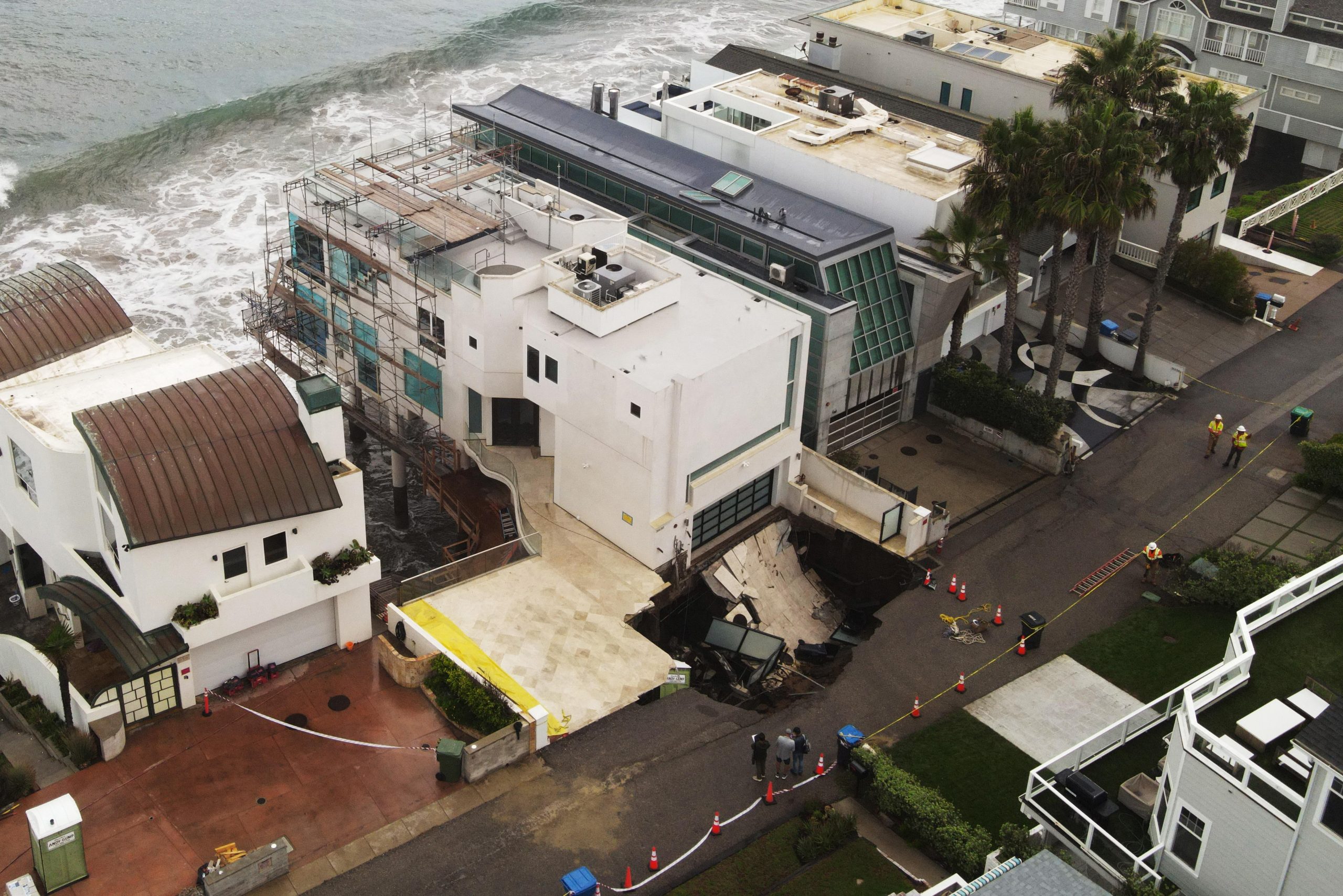
The picturesque allure of coastal living is increasingly being challenged by a relentless environmental force: coastal erosion. The recent dramatic collapse of actor Nicolas Cage’s Malibu driveway, swallowed by a 30-foot-wide sinkhole, serves as a stark and expensive reminder of this growing threat. This incident, while headline-grabbing due to its celebrity connection, is far from an isolated event. It underscores a broader, more concerning reality for countless coastal communities worldwide.
The Unseen Power of the Ocean
The incident at Nicolas Cage’s property wasn’t a sudden, inexplicable geological event. According to reports, a period of unusually high surf and powerful waves directly contributed to the ground beneath his mansion giving way. This phenomenon, known as coastal erosion, is the gradual disappearance of land along the coastline. It’s driven by a combination of natural forces like wave action, currents, and wind, but it’s being significantly exacerbated by climate change. Rising sea levels, fueled by melting glaciers and thermal expansion of ocean water, mean that waves are reaching further inland and with greater force.
The consequences of this relentless process are profound. For Nicolas Cage, it meant a damaged property and a significant repair bill. For the residents of Malibu, it led to evacuations and disruption due to a ruptured gas main and the collapse of an access road. However, the implications extend far beyond individual property damage. Entire towns and infrastructure built close to the shore are now at risk. The very foundations of coastal economies, often reliant on tourism and beachfront properties, are being undermined.
A Growing Threat to Coastal Communities
The scenario witnessed in Malibu is not unique. Similar incidents of coastal erosion and sinkhole formation are occurring with increasing frequency along coastlines globally. From small, picturesque beach towns to major urban centers, the encroaching sea is forcing a difficult reckoning. The cost of inaction is mounting, both in terms of economic losses and the potential displacement of communities.
Experts have been warning about the accelerating pace of coastal erosion for years, linking it directly to anthropogenic climate change. The Intergovernmental Panel on Climate Change (IPCC) has repeatedly highlighted the vulnerability of low-lying coastal areas to rising sea levels and increased storm intensity. This means that the “Poseidon always reclaims his own” sentiment, as described by the original report, is becoming a more tangible and destructive reality. The question is no longer if our coastlines will change, but how we will adapt to these inevitable shifts.
The Imperative for Adaptation and Resilience
The Nicolas Cage sinkhole serves as a dramatic, high-profile illustration of a widespread environmental challenge. As sea levels continue to rise and storm surges become more powerful, coastal communities face a stark choice: adapt or face the consequences. This adaptation can take many forms, from building more robust sea defenses and restoring natural coastal buffers like wetlands and dunes, to considering the managed retreat of infrastructure and homes from vulnerable areas.
The future of coastal living hinges on proactive planning and significant investment in climate resilience. Ignoring the signs, as the summer sunburn analogy suggests, will only lead to more painful and costly lessons. The dramatic collapse of a celebrity’s driveway is a wake-up call, reminding us that the power of nature, amplified by climate change, is a force that can no longer be underestimated, and its effects are reaching closer to home than many realize.
Based on materials: Vox