
The midterm elections, a moment of apparent Democratic triumph, briefly suggested a potential shift in Donald Trump’s immigration policy. However, this hopeful pause was short-lived. The subsequent appointment of Stephen Miller, the driving force behind some of Trump’s most stringent and debated immigration initiatives, as White House Chief of Staff, signaled a clear intention to reinforce existing strategies. This move suggested a focus on galvanizing the Republican base, particularly those alienated by foreign policy decisions and economic pressures, through hard-line stances. Yet, evidence suggests this approach may not resonate with all segments of the electorate, including some younger conservatives.
Generational Divides Emerge in the GOP
A year-long observation of a College Republicans chapter at Clemson University, conducted by New York magazine staff writer Simon van Zuylen-Wood, has revealed a growing internal dissonance. While the broader Republican party may be doubling down on controversial policies, some younger members are exhibiting a divergence in their political leanings. This is particularly evident in their reactions to figures like Stephen Miller. The observation that some individuals express reservations about Miller, even noting his Jewish heritage as a point of confusion or contention in their support, highlights a complex and evolving sentiment within the younger conservative demographic. This internal questioning suggests that the traditional Republican platform may not automatically translate into unwavering loyalty for all young voters.
Beyond the Red Meat: Navigating New Priorities
The appointment of Miller and the perceived “red meat” strategy from the Trump administration appears to be encountering unexpected resistance from within the party’s own ranks. The article implies that for some College Republicans, issues beyond the core tenets of the party are gaining prominence. Factors such as the ongoing conflicts abroad, the escalating cost of living, and perhaps broader societal shifts are prompting a re-evaluation of political allegiances. This isn’t to say these young Republicans are abandoning conservatism wholesale, but rather that their interpretation of it, and their priorities, may be evolving. The instance of voters expressing bewilderment at Miller’s background, rather than immediate dismissal of his policies, points to a nuanced internal debate that transcends simple partisan lines.
Conclusion: A Glimpse into the Future of the GOP
The experiences of the Clemson College Republicans offer a compelling snapshot of a potential generational shift within the Republican party. While the leadership may be signaling a return to familiar, hard-line tactics, a segment of the younger conservative base appears to be grappling with the implications of these policies and the messaging surrounding them. This internal recalibration, driven by a mix of external pressures and evolving perspectives, could foreshadow a future where the Republican party’s appeal is not as monolithic as it once was. The willingness of some young Republicans to “vote blue” or express discomfort with party stalwarts indicates a complex and dynamic political landscape, where traditional loyalties are being tested and potentially redefined.
SOURCE INFORMATION:
TITLE: The college Republicans who voted blue in the midterms
DESCRIPTION: For a brief, fleeting moment after the Democrats’ crushing midterm victory, President Donald Trump seemed open to moderating his approach to immigration. Then he said psych! and named Stephen Miller, the architect of his most aggressive and controversial immigration policies, as White House chief of staff. The move seemed to signal that Trump and his […]
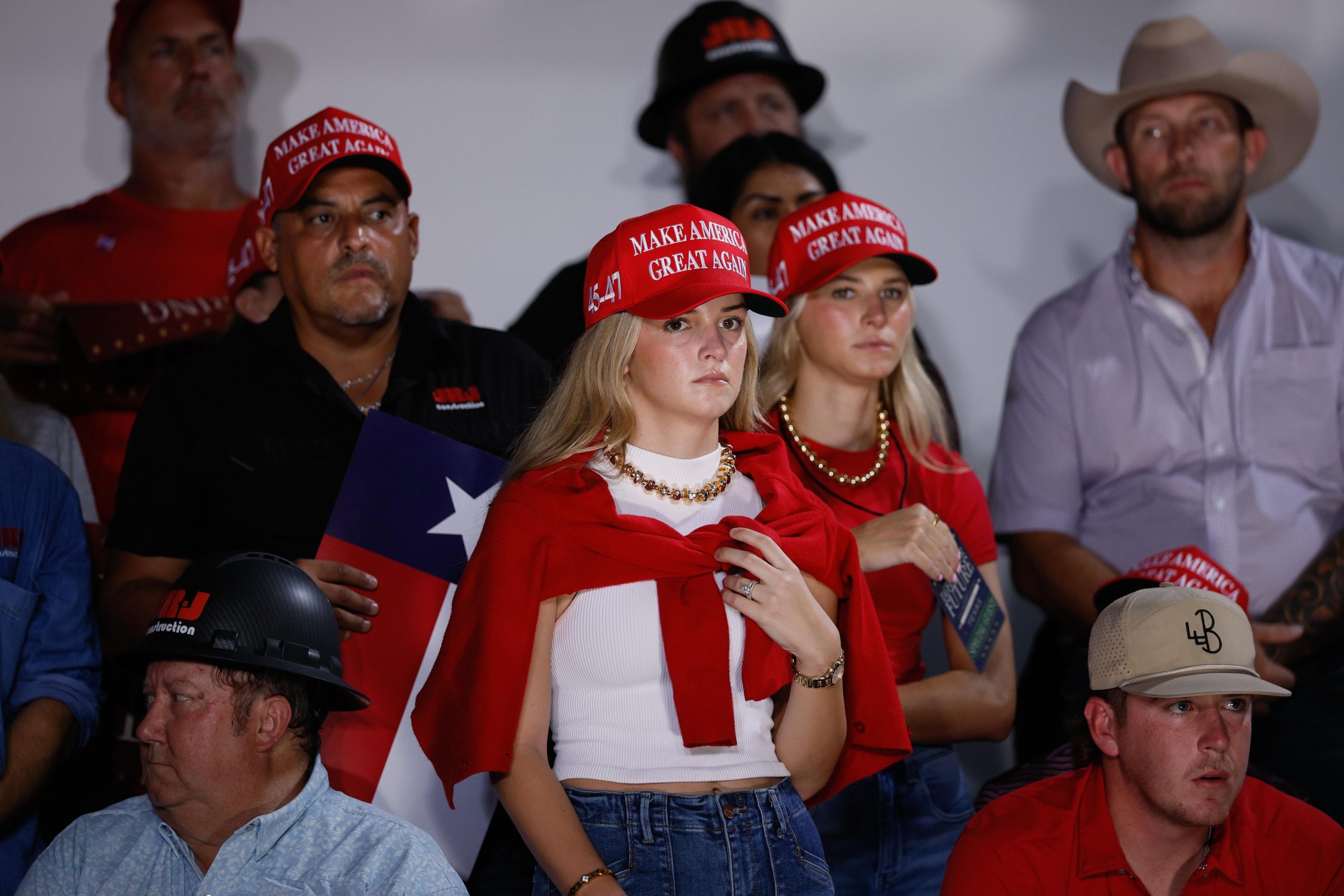
CONTENT: Supporters wear MAGA hats as they attend a midterm campaign rally by Vice President JD Vance in Weatherford, Texas, on October 29, 2026. | Evan Vucci/Getty Images For a brief, fleeting moment after the Democrats’ crushing midterm victory, President Donald Trump seemed open to moderating his approach to immigration. Then he said psych! and named Stephen Miller, the architect of his most aggressive and controversial immigration policies, as White House chief of staff. The move seemed to signal that Trump and his coalition will be doubling down and seeking to win back base voters disaffected by the war in Iran and high cost of living with red-meat issues. But some of those voters might be too far gone. “The fact that Stephen Miller is Jewish, they’re just like, ‘Yeah, I don’t know,’” Simon van Zuylen-Wood, a staff writer with New York magazine who has been checking in with a College Republicans chapter at Clemson University for more than a year, told Today, Explained
SOURCE: Vox
Based on materials: Vox